Cellar Sign Studio · buyer guide
A tasting-room sign schedule by guest action
For Cellar Sign Studio worldwide orders, list the decisions a guest encounters in the venue’s actual service path, then ask what information is missing at each point. A sign should answer a defined question or identify a place. Do not begin with a catalog checklist and assume every attractive display has a useful job in the room.
Reviewed 2026-09-05 · AI-assisted editorial review. General buying guidance; illustrative scenarios are not customer case studies. Images are AI-generated concepts.
Walk the intended arrival, tasting and departure sequence with the venue owner. Record where a guest checks in, sees the approved tasting offer, identifies wines and completes the next agreed action. The exact path belongs to the venue and may differ across service formats.
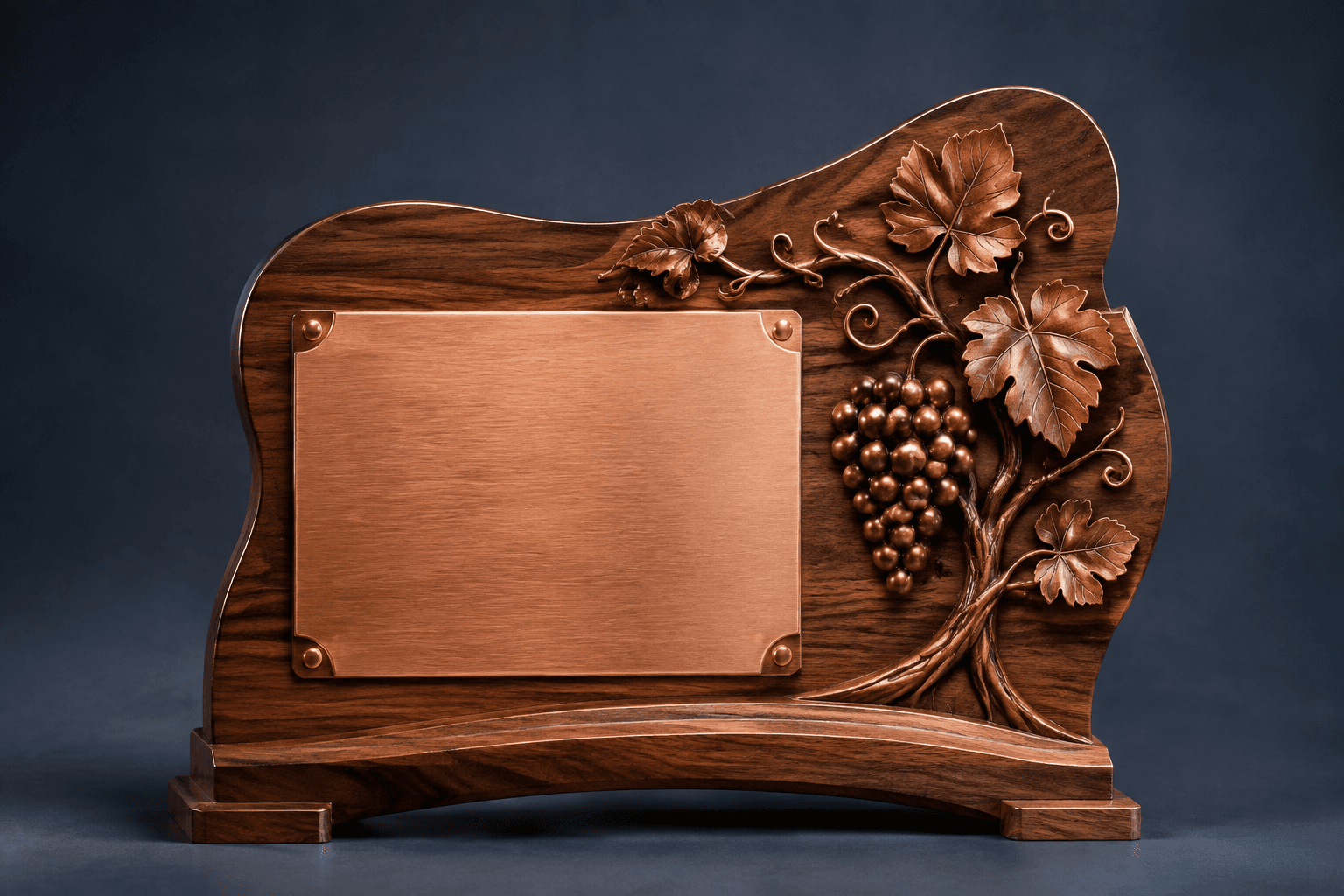
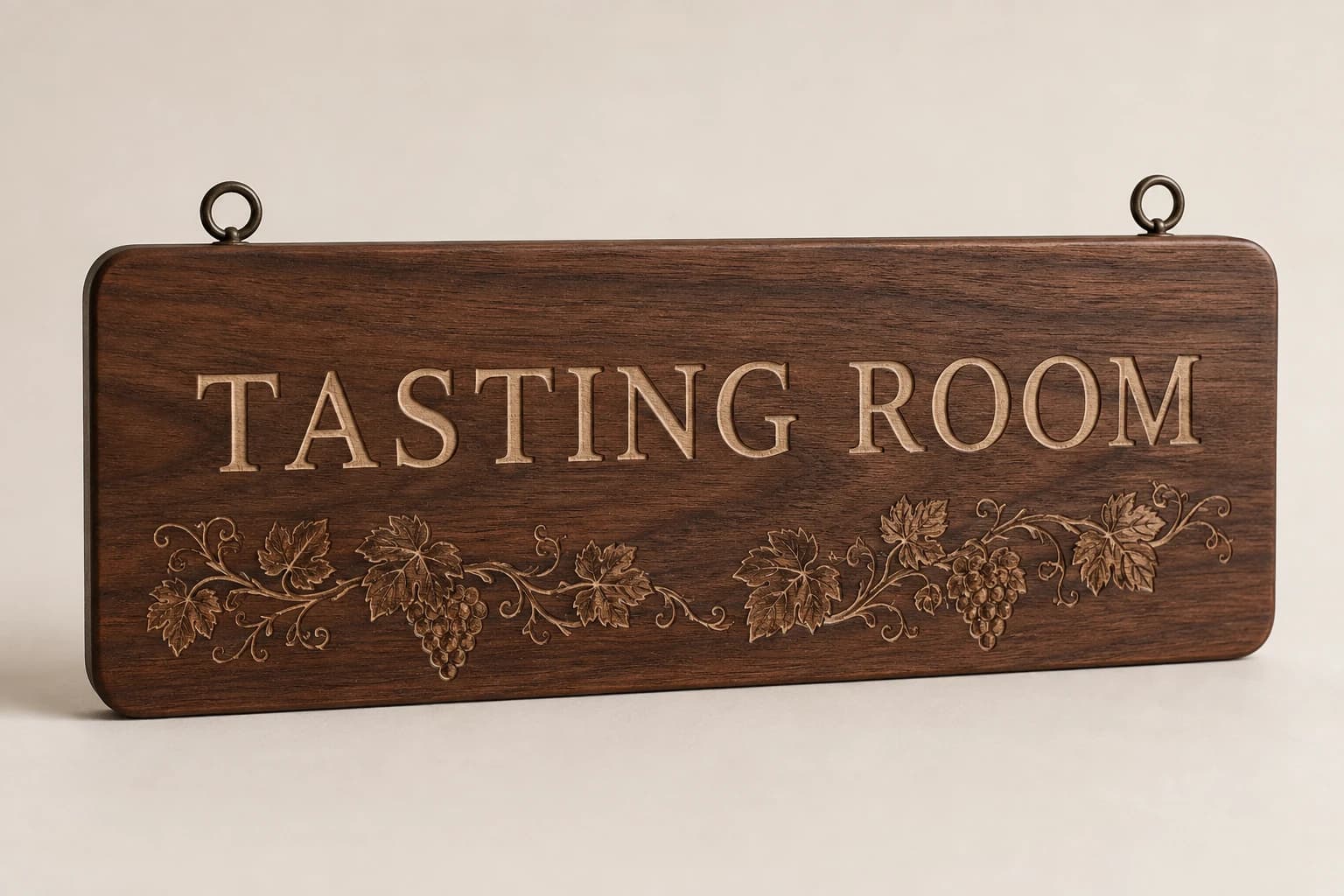
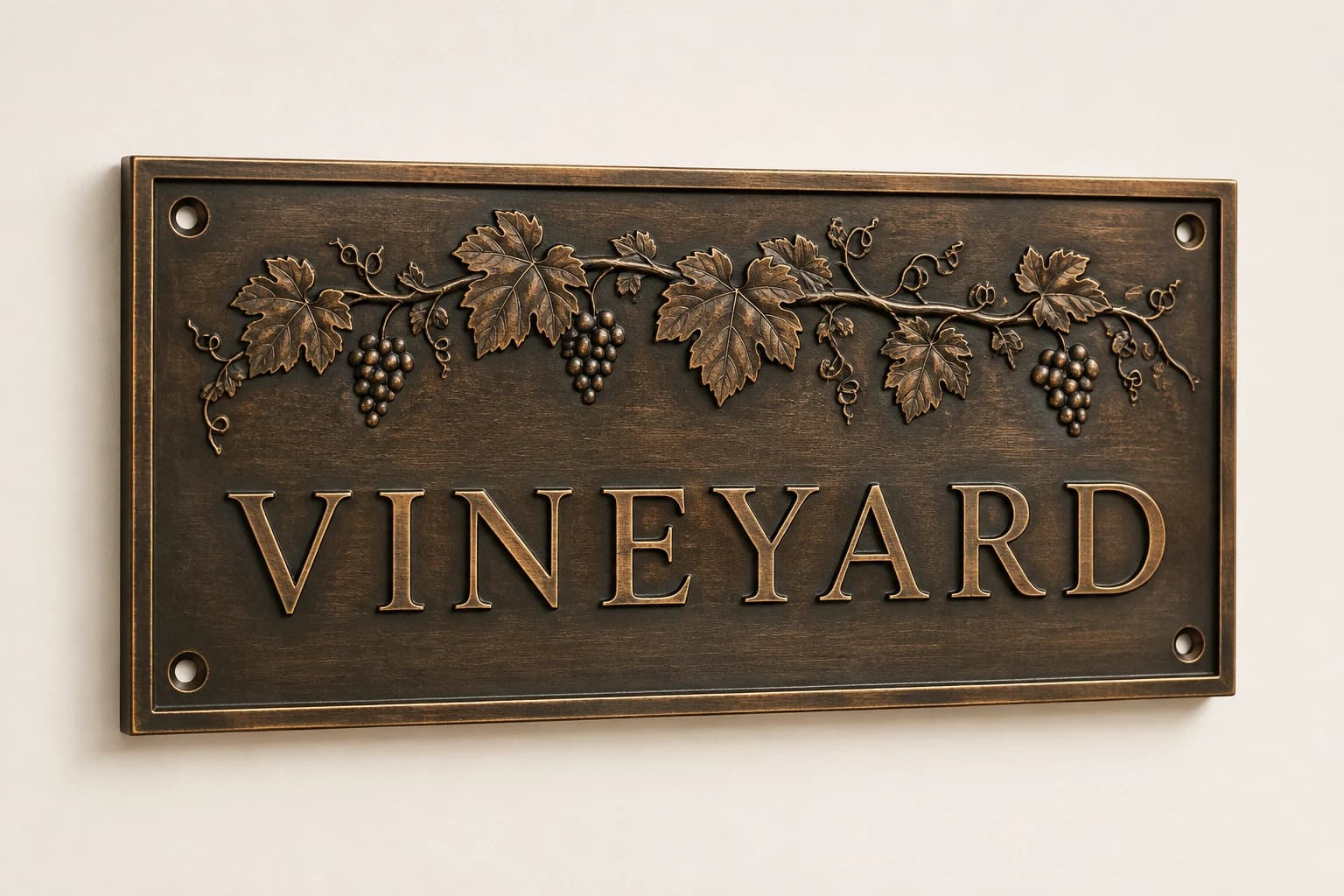
Keep decorative identity separate from instruction. A beautiful venue plaque can establish the place without explaining where to wait or how to find the current menu. Both can be useful, but they should not be counted as substitutes for one another.
What belongs at the arrival point?
Arrival information should help guests understand the venue’s approved next step, such as where to check in or whom to ask about the tasting offer. Use the actual service process and location. Do not invent reservation, payment or availability rules merely to make an entrance sign sound complete.
Ask the venue owner for the exact instruction and the person who can update it. If the process changes by event or season, decide whether that content should be replaceable. A permanent welcome piece can remain separate from a changing check-in message.
Review the physical position through the venue's appropriate process and use the proposed actual-size layout. The sign should be assessed in relation to the guest's approach, not only as a flat design on a screen. This guide does not prescribe universal placement or accessibility dimensions.
What information belongs at the tasting position?
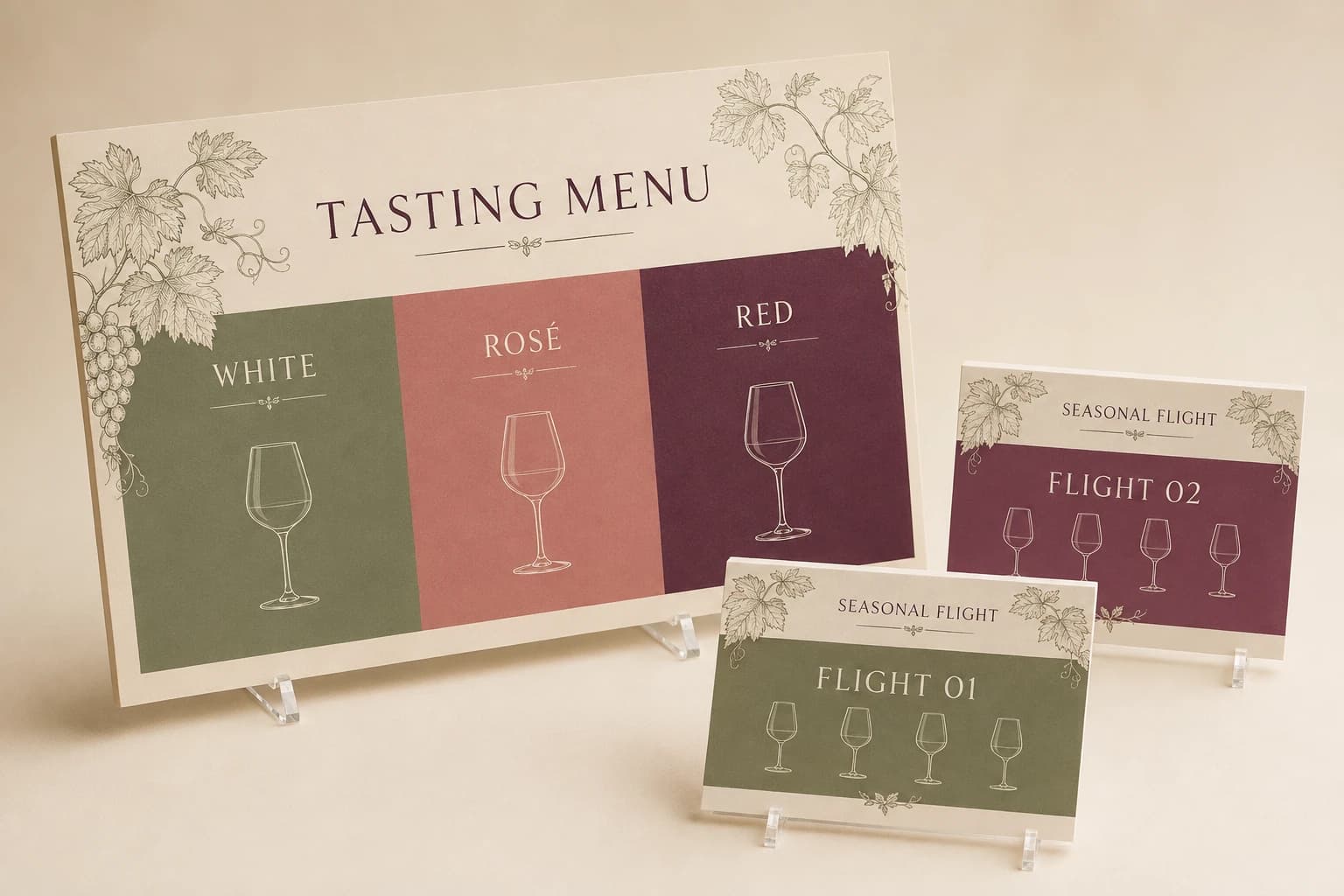
At the tasting position, connect the approved menu and product identifiers to the actual offer being served. Keep wine names, vintage references and any prices current through a named content owner. A sign should help a guest understand the selected information, not make unsupported claims about products or availability.
If several stations use the same menu, connect them to one approved content revision while retaining separate physical locations. A change to one wine should identify every display that carries that list. Do not leave an old insert at a secondary station because the main counter was updated first.
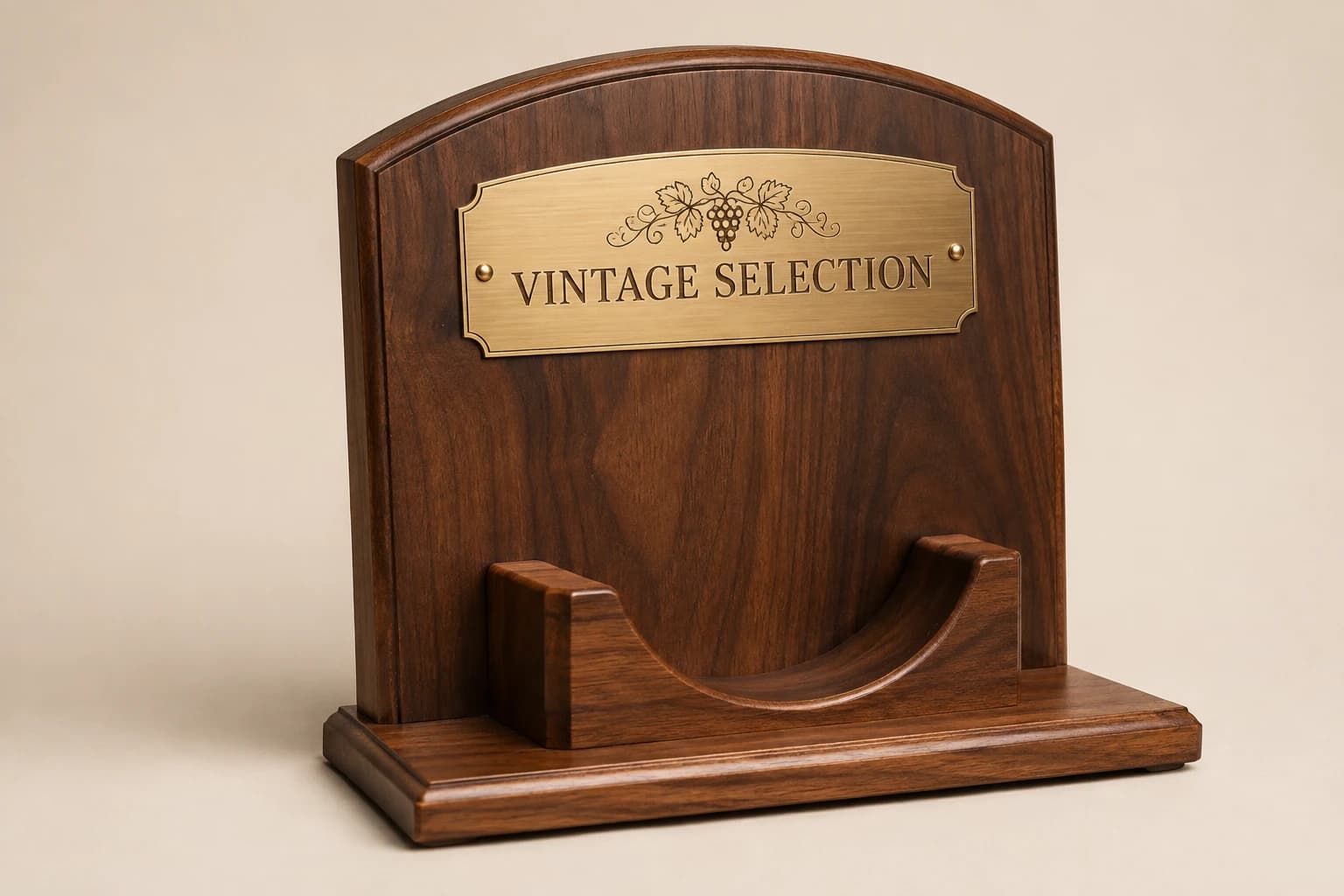
For a bottle display, keep product-to-position references clear and have the maker review the actual physical proposal. A menu count does not establish bottle capacity, and a bottle position does not automatically require a separate sign if the approved display combines information deliberately.
Illustrative example: How do six menu displays and four information signs total ten?
The fictional example has six tasting stations with one menu display each, plus four separate guest-action signs. Six times one plus four equals ten physical pieces. The table-sign planner counts those approved inputs only; it does not decide service capacity, required signage or the number of guests the venue can host.
The worksheet assigns the four additional signs to arrival, tasting information, purchase guidance and a venue-approved shared function. Those are sample categories, not universal requirements. The real schedule needs exact locations and approved wording.
If two stations share one physical menu board by an approved design decision, reduce the menu display count accordingly. Do not keep the six-piece assumption merely because there are six service positions. Conversely, adding a second face to a complete display does not automatically add another assembly; use the actual physical unit described in the quote.
How should checkout or next-step information be handled?
Use the venue’s approved purchase or next-step process to decide what information belongs near checkout. State only current, authorized instructions and offers. A sign should not promise stock, a discount or a service condition that staff have not approved for the actual situation in which guests will see it.
Keep changing offers separate from permanent identity. If the venue chooses to display ordering or membership information, assign an owner for that content and review any conditions before release. The maker should reproduce the approved message, not invent an incentive to make the sign persuasive.
Consider whether a sign is the right format for a complex explanation. Some details may be better handled by staff or a separate approved menu. The purpose is to make the next action clear, not to fill every available surface with all of the venue's information.
Count displays in a guest-action schedule
Load the fictional worked example, then replace every assumption with your approved project inputs.
Method: Calculate only the entered physical counts. The result does not choose specifications, authorize wording or reserve production.
Build your plan
Count separate dining areas and event layouts before entering the table total. Spares are an explicit input.
Use the article’s example files
Fictional example rows show how to separate physical quantities, wording and approval references. Replace them with your project schedule. HOLD and SAMPLE entries are not production instructions.
How do you quote and improve the sign schedule?
Request a quote by physical display type and quantity, with current content, supports, personalization and delivery described. Keep the guest-action schedule attached so each piece has an identifiable job. Price comparisons are more useful when both proposals cover the same complete objects and the same intended update methods.
At receipt, match each sign to its approved location and content revision. After the venue puts the schedule into use, ask staff which specific questions remain unanswered. Treat those observations as prompts for review, not automatic proof that more signs are needed.
A revised Cellar Sign Studio brief should name the unresolved guest task, the affected location and the proposed content change. Sometimes the right change is clearer wording or removal of competing information, rather than another physical display. Keep the purchase focused on the actual job each sign is expected to perform.
What should be kept after the sign schedule is installed?
Retain the location, guest action, approved content revision and physical display reference for each sign. When the service process changes, the venue can identify which information points need review rather than replacing every decorative piece. Keep changing menu records separate from permanent venue identity.
Keep observed guest questions as internal improvement notes if the venue chooses to collect them. Do not turn a small informal observation into a performance statistic. A later Cellar Sign Studio request can use the specific unanswered question to brief a revised sign without claiming that the previous display caused a measured business outcome.
When should a sign be removed instead of adding another?
Consider removing or replacing a sign when its message is outdated, duplicates a nearby instruction or no longer supports the venue’s approved service path. Start with the specific guest question and current location. More physical displays are not automatically the right response to confusion about one existing message.
Ask staff to identify the exact wording or placement that creates the problem, then review it with the venue owner. If two signs give different next steps, resolve the process and select one current instruction before commissioning more artwork. Do not treat an extra sign as a way to avoid deciding which message is correct.
Keep the retired display's reference in the project history while removing it from active use through the venue's process. A later reorder should not revive the old instruction because its artwork is easy to find. The accepted schedule should show what each current piece does and which former messages are no longer selected.
Which option fits this order?
Compare signs by the guest decision they support. The physical schedule should follow the venue’s approved service process, with changing content and permanent identity kept distinct. These categories help organize a brief, but they do not establish mandatory placements, service rules or a measured effect on sales.
| Option | Useful when | Scope to resolve |
|---|---|---|
| Arrival instruction | A guest needs the approved first step at the venue. | Actual process, location and whether the message changes. NMSU discusses tasting menus and wine identification. |
| Tasting information | A guest needs the current menu or product identity. | Approved wine content, revision ownership and display-to-station mapping. |
| Next-step guidance | A guest needs the venue’s approved purchase or follow-up instruction. | Current offer or process without unsupported availability promises. |
Sources: New Mexico State University: Design and Functionality of a Wine Tasting Room
What should buyers confirm before ordering?
A tasting-room sign should answer a defined guest question at an approved location. Cost follows the physical schedule and included update method, not the number of ideas on a checklist. These answers explain shared menus, changing arrival instructions and revision evidence without assuming that more displays automatically improve the venue’s service or sales.
What determines the cost of a tasting-room sign schedule?
Cellar Sign Studio quotes should count the physical displays and separate their construction, personalization, supports, changing inserts and delivery. The number of guest actions does not automatically equal the number of signs. First approve the location schedule, then compare written prices against that exact scope rather than a generic venue package.
Does every tasting station need its own menu sign?
Not automatically. Count the physical displays selected in the approved venue layout. A shared board may serve several positions, while another setting may use individual menus. The planner multiplies your entered counts and does not decide the right service arrangement or required placement for the venue.
Can a permanent welcome plaque also explain changing check-in rules?
It can only if the owner deliberately accepts the update consequences. A separate replaceable instruction often makes the different content lives easier to manage, but the actual construction must be confirmed. Do not engrave provisional service rules simply because the permanent design has unused space.
Should the signs repeat every offer and product detail?
Give each sign a defined guest task and include the approved information needed for that task. Complex or changing details may belong in a menu or staff explanation. Adding every offer to every display can make the schedule harder to maintain and obscure the specific next action.
How can the venue judge whether a sign needs revision?
Ask which exact guest question remains unanswered and inspect the location, wording and competing information. Record observations with their limited context. Do not claim a conversion result from a few comments or assume that another sign is always the remedy; a clearer existing message may be the appropriate change.
Sources and scope
The sources below support the cited technical details. The ordering workflows are editorial recommendations. Your project specification, price and schedule are established in the written quote and approved proof.
- New Mexico State University: Design and Functionality of a Wine Tasting Room · checked 2026-09-05
Which buying guide should you read next?
All buying guidesCellar Sign Studio helps buyers distinguish a lasting winery identity piece from a tasting menu that must change with the offer. For worldwide orders, specify the stable venue wording, the replaceable menu content and the physical display separately. One attractive design should not force a whole sign replacement whenever a flight changes.
Cellar Sign Studio bottle-display orders should count complete display assemblies separately from the bottle positions they contain. For worldwide projects, provide the actual bottle dimensions and intended use for review. A display with four positions is still one ordered assembly when that is the construction described in the written proposal.