Cellar Sign Studio · buyer guide
Bottle positions versus display assembly quantities
For Cellar Sign Studio worldwide orders, bottle positions describe how many approved bottles a display is intended to present. Display quantity describes how many complete physical assemblies are ordered. Keep both numbers visible. Six displays with four positions each provide twenty-four planned positions, but they remain six ordered assemblies when the quote supplies each as one complete unit.
Reviewed 2026-09-05 · AI-assisted editorial review. General buying guidance; illustrative scenarios are not customer case studies. Images are AI-generated concepts.
Start with the complete proposed object and ask the maker to define its components. A base, several supports and an information panel may be quoted as one assembly or as separate pieces. The purchasing schedule should follow that actual scope rather than using the word display loosely.
The position count does not establish structural capacity or bottle compatibility. Those require review of the actual construction and supplied bottle information. Do not treat arithmetic as permission to place any four bottles on a concept that happens to show four decorative outlines.
What bottle information should the buyer provide?
Provide the actual bottle dimensions, shape and intended displayed condition requested by the maker. Identify whether the display is for supplied examples, changing inventory or another approved use. The maker should assess the proposed support against those specific inputs rather than infer compatibility from a generic wine-bottle illustration.
Use a clear reference for each bottle type. A nominal volume does not describe every contour, base or closure detail relevant to a display. If the bottle selection is provisional, mark it as such and ask what can be reviewed before it is finalized.
Do not provide handling or load instructions based on guesswork. The appropriate maker and venue reviewers should define the actual accepted use. This guide helps organize the brief; it does not supply structural calculations, stability guarantees or a universal bottle-fitting rule.
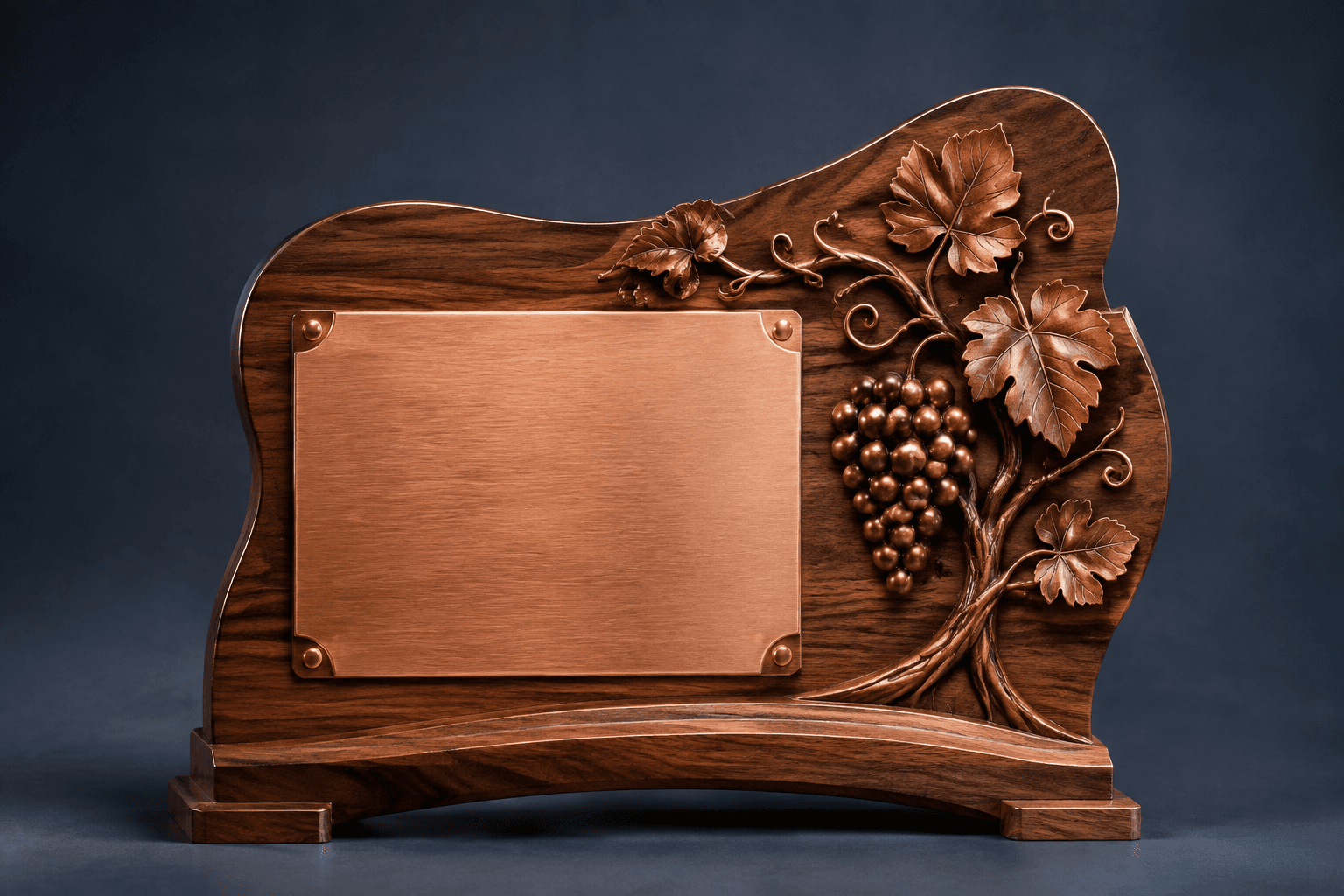
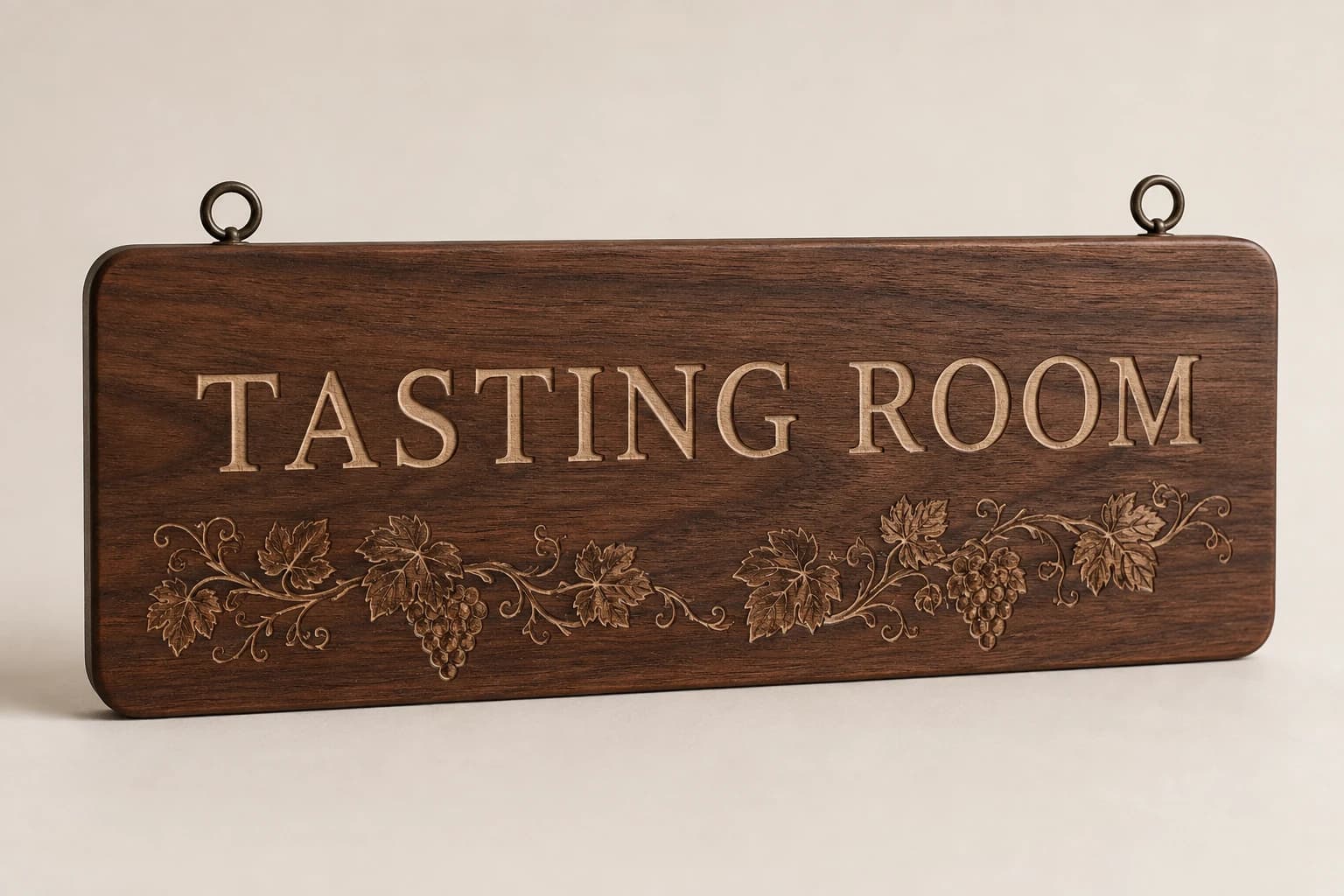
How should bottle labels and display captions be matched?
Connect each planned bottle position to its approved product caption when the display includes names, vintages or award information. A correct assembly count does not ensure that the right caption appears beside each bottle. Use position references that remain clear in the proof and the venue’s final arrangement.
If bottles will rotate, ask whether captions should be replaceable and how the proposed system supports that update. Permanent engraving of a changing wine list may create unnecessary replacement work. The venue owner should choose the intended content life before selecting decorative details.
For an award display, verify the exact product, vintage and recognition wording through the authorized source. A general venue award and a vintage-specific result should not be merged because they fit the same caption area. Keep the meaning of each label explicit in the approved content file.
Illustrative example: How do six display assemblies provide twenty-four planned bottle positions?
The fictional example orders six complete display assemblies, each designed for four reviewed bottle positions. The physical order total is six assemblies. The separate position total is six times four, or twenty-four. The quantity calculator therefore uses six units and one complete assembly each, with no extras or spares.
Its result is six total pieces. The worksheet shows six assemblies, four positions per assembly and twenty-four planned positions in separate columns. None of those figures is a verified capacity for an existing product; they are illustrative inputs for a proposed design discussion.
If the venue adds a seventh complete display, the physical total becomes seven and the planned positions become twenty-eight under the same reviewed four-position concept. If it merely changes a caption at one position, the assembly count may stay six. Ask the maker whether the actual caption change needs a separate replacement component.
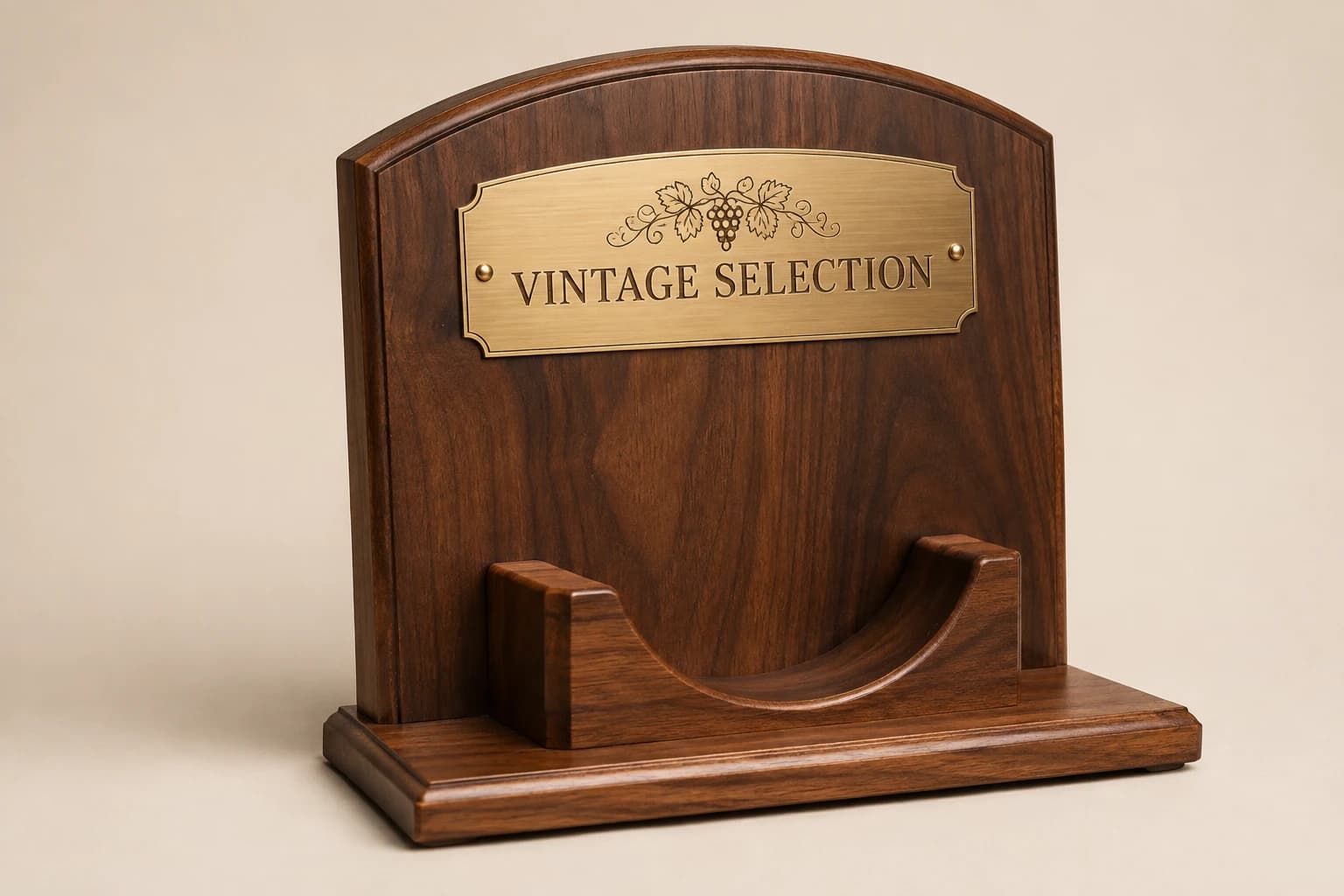
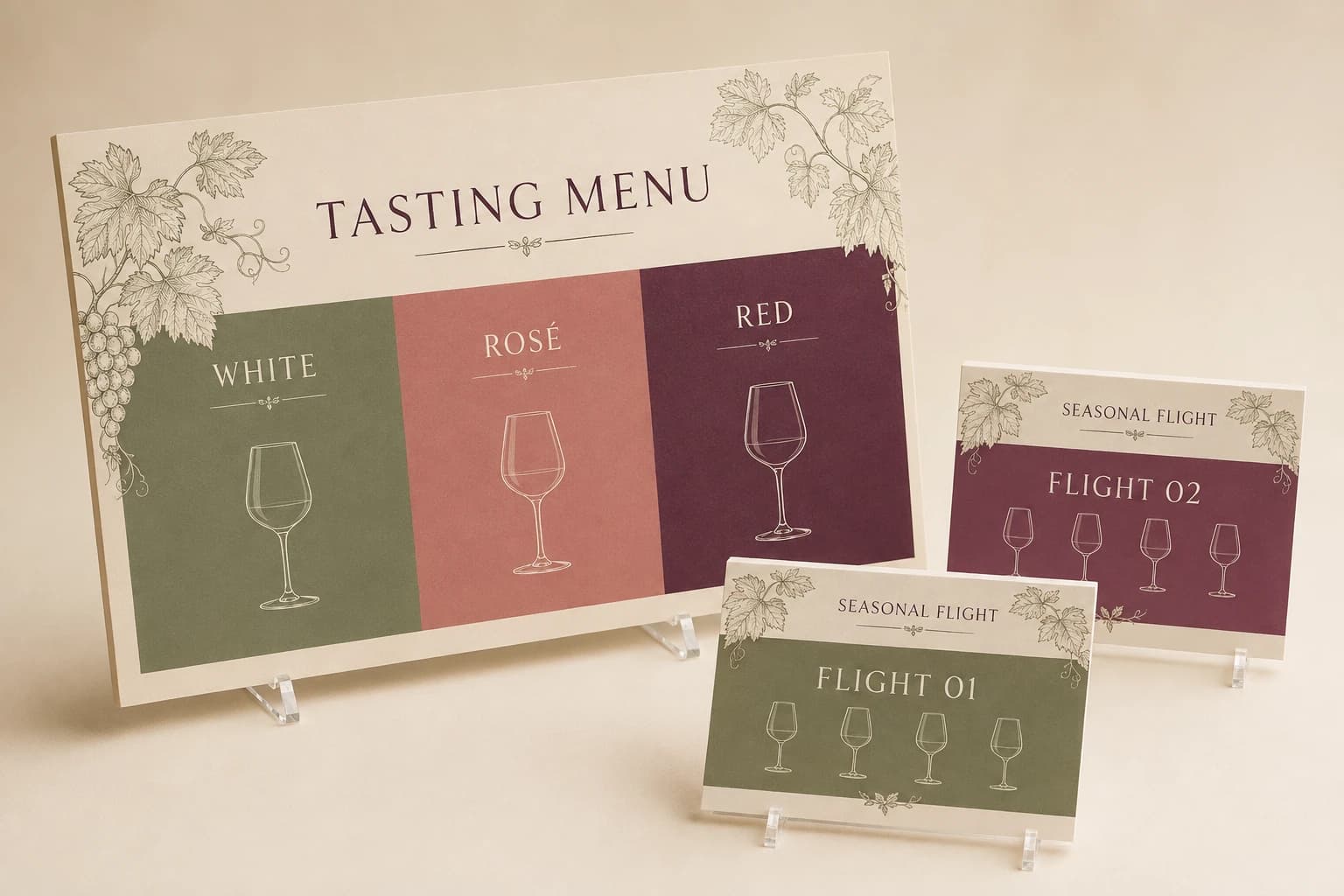
What does a complete bottle-display quote include?
A complete quote should identify each display assembly, its included supports and information elements, the reviewed bottle assumptions and any excluded work. Price should be compared per accepted assembly or separately named component. Setup, personalization, packing and delivery should remain visible rather than being hidden behind a position-based total.
Ask whether the maker needs physical samples or measurements to complete the proposal. If a prototype is commissioned, state what it is meant to establish and whether it counts toward the final order. A sample for appearance does not automatically validate every bottle variant or later operating condition.
When comparing alternatives, reconcile the same bottle set and intended use. A lower total for fewer supports or omitted captions is a different scope. The buyer should choose between clearly described proposals rather than infer value from the number of decorative bottle positions shown in an image.
Count complete bottle-display assemblies
Load the fictional worked example, then replace every assumption with your approved project inputs.
Method: Calculate only the entered physical counts. The result does not choose specifications, authorize wording or reserve production.
Build your plan
Set spares yourself. This calculates the quantities you enter; it does not assume a recommended buffer.
Use the article’s example files
Fictional example rows show how to separate physical quantities, wording and approval references. Replace them with your project schedule. HOLD and SAMPLE entries are not production instructions.
How should the venue receive and maintain the displays?
Receive the order by complete assembly or the component sets described in the quote, then match captions and position references to the approved plan. Keep the maker’s accepted use and care information with the venue record. A carton containing six bases is not a complete six-display order if other quoted parts are missing.
Before placing different bottles in the display later, compare them with the inputs used for the accepted proposal and ask for review where needed. Do not extend a fit decision for one bottle shape to all future products. The venue should own that change process.
For a Cellar Sign Studio reorder, identify whether the request is another complete assembly, a caption update or a replacement component. Include the accepted reference and the new intended bottle information. This keeps the next quote tied to the actual physical job rather than repeating an old position count that may no longer describe the display.
What should be retained for a later display order?
Keep the accepted assembly drawing and the bottle information used in its review together. A later bottle with a different shape should not be assumed to fit because it has the same nominal volume. Ask the maker whether the changed item requires a revised proposal.
Record whether the original order counted complete displays, separate supports or other physical components. This avoids repeating a position total as an assembly quantity when the next buyer copies the old worksheet. Cellar Sign Studio requests should name the actual deliverable and its included parts every time.
How do you count a prototype and the final displays?
Count a prototype separately unless the written proposal explicitly includes it as one of the final accepted assemblies. Its purpose may be to review appearance or fit, and its sample content may differ from the released display. State that relationship before adding its quantity to the final order summary.
For example, the six-assembly illustration could involve one separate prototype followed by six production assemblies, creating seven supplied objects across the two scopes. Alternatively, an accepted prototype might become the first of six if that is specifically agreed. Neither treatment should be assumed from the word sample.
Record what the prototype review established and which specification changed afterward. If bottle dimensions or captions are revised, the final drawing should show the selected state. A sample accepted for appearance should not be presented as proof of every later bottle's compatibility. Keep the accepted use and remaining questions visible before authorizing the production group.
Which option fits this order?
Count the ordered object, the places it provides and any separately supplied components as different quantities. These distinctions make the proposal reviewable and prevent an attractive display rendering from becoming an unsupported capacity claim. The actual accepted construction determines how the quantities connect in the final order.
| Option | Useful when | Scope to resolve |
|---|---|---|
| Complete display assemblies | You need the number of physical units being purchased. | Included supports, captions and accepted bottle-use assumptions. NMSU discusses tasting menus and wine identification. |
| Bottle positions | You need to plan the arrangement within each reviewed display. | Actual bottle fit and position-to-caption mapping. |
| Replacement components | An existing accepted display needs a specific part updated. | Compatibility, affected position and whether a whole assembly is necessary. |
Sources: New Mexico State University: Design and Functionality of a Wine Tasting Room
What should buyers confirm before ordering?
Bottle positions and complete display assemblies are separate planning quantities. The quote should define the actual physical deliverable and reviewed bottle assumptions before cost is compared. These answers explain the six-assembly example, fit review and caption changes without treating position arithmetic as a load rating or a promise that every bottle will work.
How is a bottle-display order priced?
Ask Cellar Sign Studio for a price per complete assembly and any separately quoted components. The number of displays, physical construction, bottle-review work, captions, personalization and delivery can change the total. A position count is not a price unit unless the written proposal explicitly defines it that way.
Do six four-position displays mean twenty-four displays?
No. The example has six complete physical displays and twenty-four planned bottle positions. Keep those totals in separate columns. The calculator counts six assemblies because each unit is one complete deliverable; the position arithmetic helps plan the arrangement and does not multiply the purchase quantity.
Can any bottle of the same volume use the display?
Do not assume that. Provide the actual dimensions and shape information requested by the maker. Bottles with the same nominal volume can require different review inputs. The accepted construction and intended use should be confirmed for the actual bottle set rather than inferred from a generic category.
Does the calculator establish safe capacity?
No. It totals entered physical quantities and the article separately shows position arithmetic. Structural suitability, stability and actual bottle compatibility need the maker’s and appropriate project reviewers’ assessment of the complete proposed assembly. The example is not a load rating or a handling instruction.
What if a vintage caption changes but the display stays?
Identify the affected caption and the retained assembly reference. Ask whether the confirmed construction supports an independent caption replacement and what that work includes. A changing text field does not automatically require a new complete display, but an editable-looking concept does not prove that a physical part is replaceable.
Sources and scope
The sources below support the cited technical details. The ordering workflows are editorial recommendations. Your project specification, price and schedule are established in the written quote and approved proof.
- New Mexico State University: Design and Functionality of a Wine Tasting Room · checked 2026-09-05
Which buying guide should you read next?
All buying guidesCellar Sign Studio helps buyers distinguish a lasting winery identity piece from a tasting menu that must change with the offer. For worldwide orders, specify the stable venue wording, the replaceable menu content and the physical display separately. One attractive design should not force a whole sign replacement whenever a flight changes.
Cellar Sign Studio tasting-room sign schedules should begin with the next action a guest needs to take, then assign a physical display to the approved location. For worldwide projects, separate arrival, tasting and checkout information from decorative venue identity. Count the resulting pieces after the guest path and current content are reviewed.