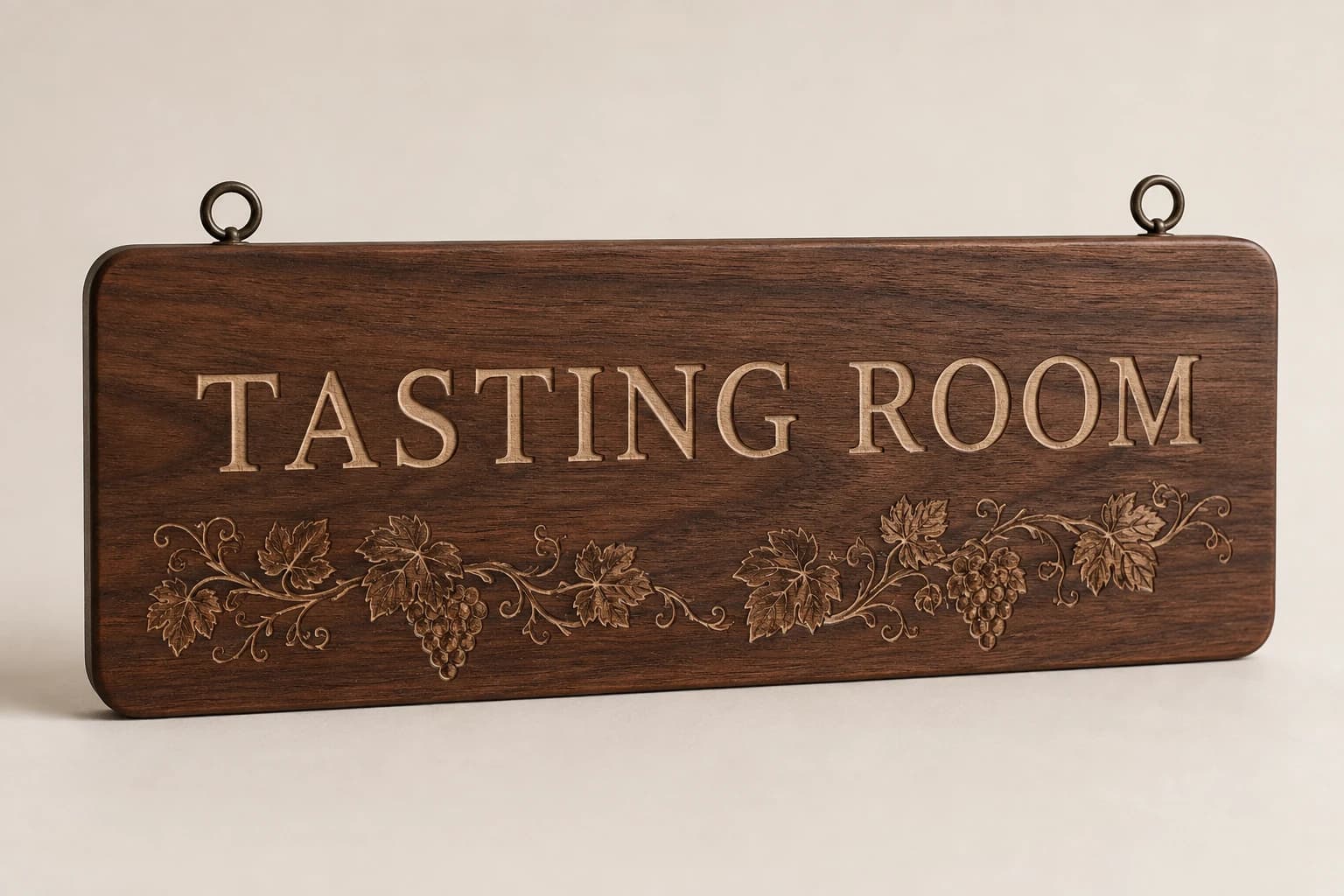
Tasting Room Sign
Make the tasting room recognizable with a sign built around the venue's name. Original artwork and a restrained secondary line can connect the entrance to the brand.
Product Planning Quiz
Answer up to 10 questions about the job, style and order you have in mind. Your product purpose, material, style and occasion shape the recommendations. Budget and delivery preferences stay in your brief for quote review.
Your answers stay in this page session. Images show original AI-generated design concepts; final specifications are agreed in the quote and proof.
Choose the purpose first. A closer material or style match will not replace a design that serves the job you selected.
Compare the physical format and the job each piece serves. Some alternatives may serve a different purpose; use the product details to decide whether that direction belongs in your brief.
Make the tasting room recognizable with a sign built around the venue's name. Original artwork and a restrained secondary line can connect the entrance to the brand.
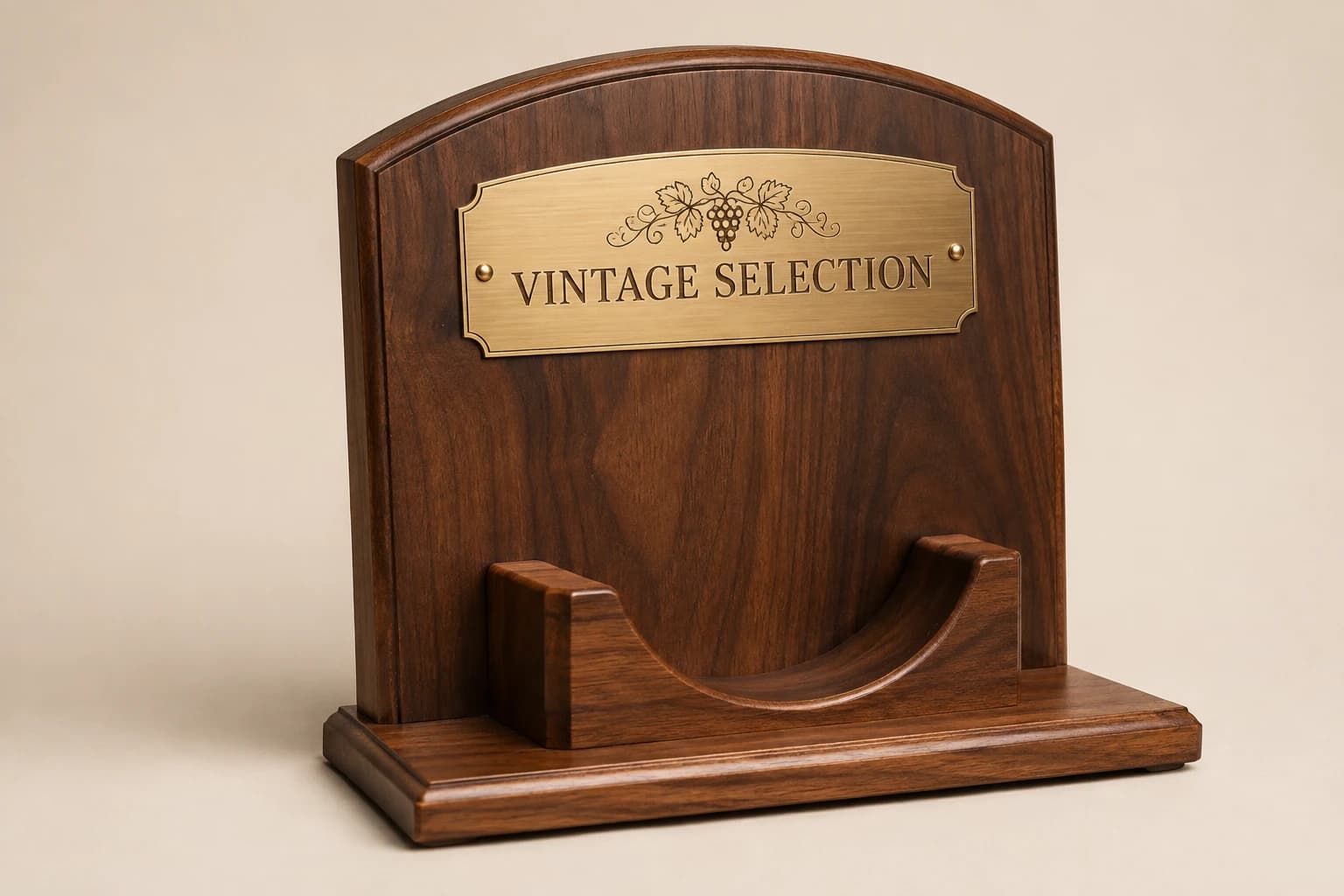
Give a bottle and its story a coordinated display plaque. The inscription can identify the wine, vintage, occasion or an actual award associated with it.
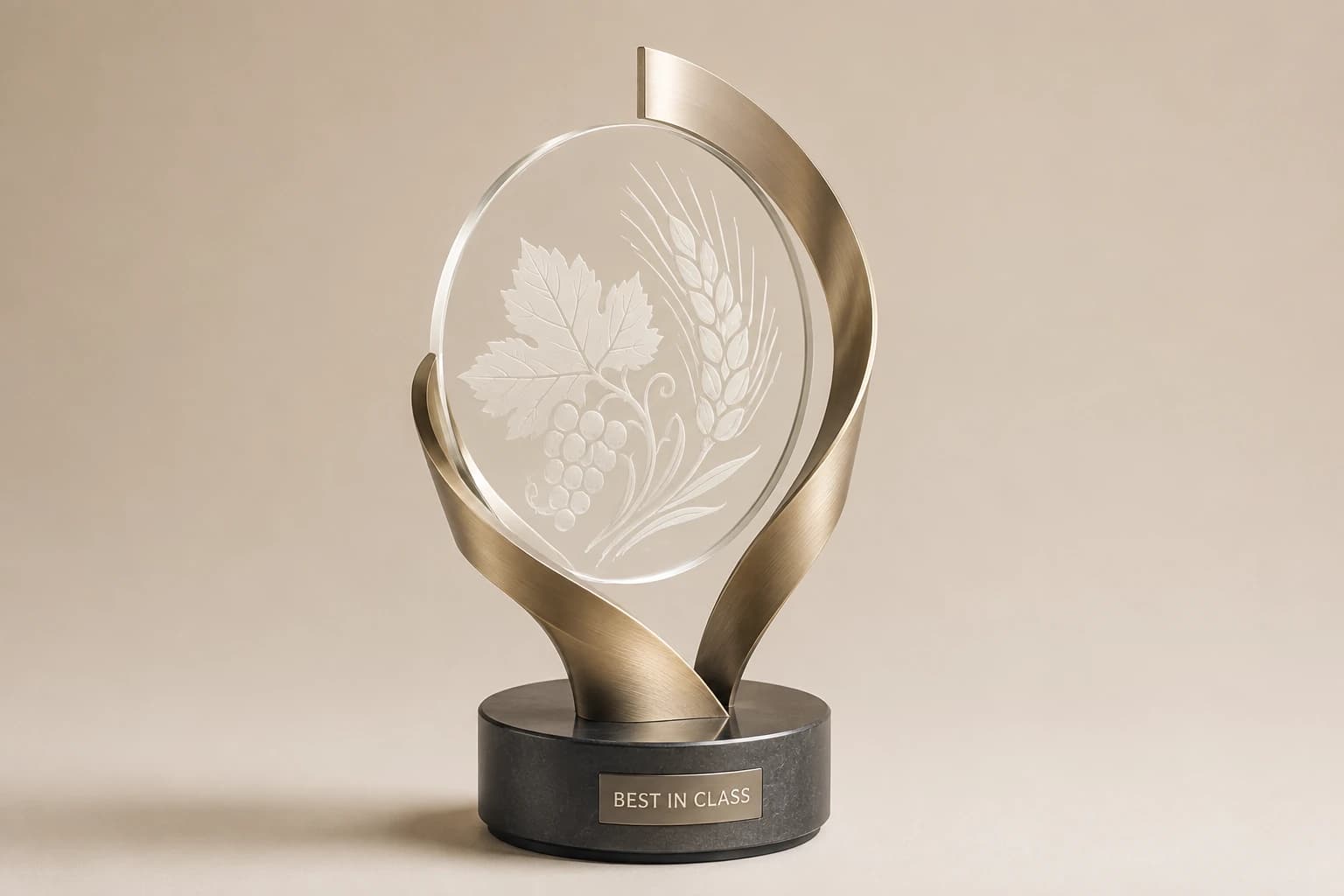
Recognize a competition result with the producer, entry and category clearly recorded. The trophy can serve wine, beer or another named tasting event.
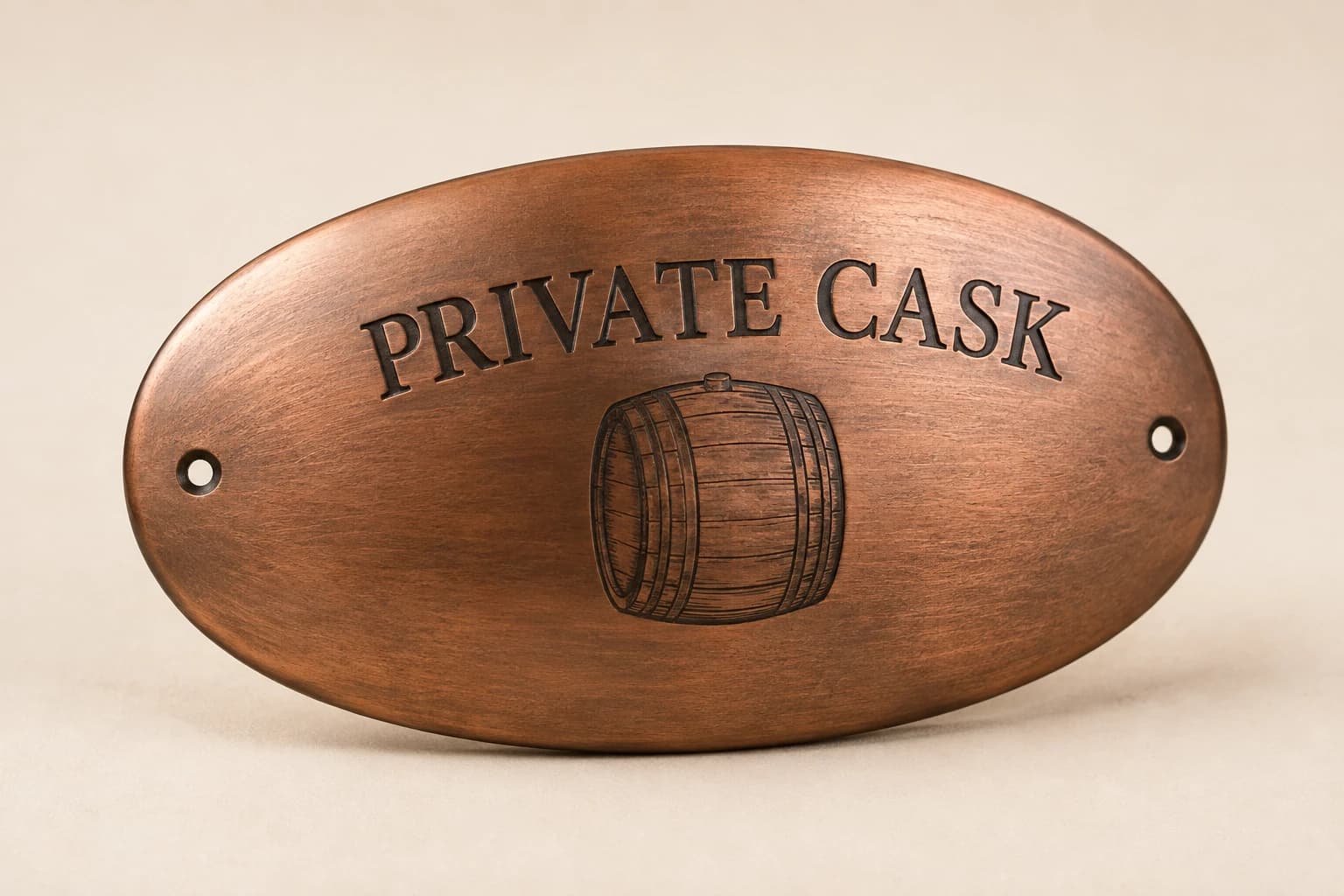
Add a dedication to a barrel or cask display with a plate shaped for the available area. The inscription can mark a gift, anniversary or named cellar feature.
Permanent venue identity and a changing tasting list need different update strategies. Consider whether the holder can remain while a printed or engraved insert changes. Keep wine names, vintage references and prices in an approved content file, and separate commemorative pieces from everyday service signs.
Choose permanent signs for venue identity and updateable formats for changing pours, vintages or prices. Bottle displays and competition awards should identify the exact producer, entry and occasion.
Details to bring into the design conversation: Station reference, current content, replaceable elements and cleaning conditions.
Your chosen purpose comes first; use material and style to refine that direction. Keep the budget, quantity, arrival date and destination with your answers so the design conversation starts with the complete order you have in mind.
Check quantities, wording and timing with the planning toolsCellar Sign Studio tasting-room sign schedules should begin with the next action a guest needs to take, then assign a physical display to the approved location. For worldwide projects, separate arrival, tasting and checkout information from decorative venue identity. Count the resulting pieces after the guest path and current content are reviewed.
A supplier-side guide for wineries running barrel programs: what to engrave, how to collect member names cleanly with a downloadable intake template, how to batch orders per release and how to plan for barrels that go home at the end of a term. Cellar Sign Studio engraves the approved member list.
Cellar Sign Studio bilingual tasting-room signs should help the same guest action in both languages while preserving approved wine names and vintage references. For worldwide orders, assign language reviewers before artwork is released. A translated heading, a product name and a price are different fields and should not be revised as one block.
Cellar Sign Studio bottle-display orders should count complete display assemblies separately from the bottle positions they contain. For worldwide projects, provide the actual bottle dimensions and intended use for review. A display with four positions is still one ordered assembly when that is the construction described in the written proposal.
Cellar Sign Studio quote
For winery and brewery awards, Cellar Sign Studio prices from the piece, position, quantity, wording, artwork, setting and arrival. A sketch of the winery and brewery awards is enough to start; details are agreed before production.