Cellar Sign Studio · buyer guide
Vintage-specific awards and venue plaques compared
For Cellar Sign Studio worldwide orders, a vintage-specific award records an approved recognition associated with a particular product and year. A venue plaque identifies or commemorates the place or organization. Keep those subjects distinct so a historical wine result is not read as a claim about every beverage now served or every year of the venue’s operation.
Reviewed 2026-09-05 · AI-assisted editorial review. General buying guidance; illustrative scenarios are not customer case studies. Images are AI-generated concepts.
Start by writing the subject of the object in one sentence. If it is a wine award, name the exact wine, vintage and approved recognition. If it is a venue dedication, name the place and the milestone the owner wants remembered. The physical style can be related without making the claims interchangeable.
A combined display can include both, but each statement needs clear labeling and its own approved source. Do not let a shared logo or decorative grape motif blur the difference between an organization and a particular product result.
Which facts belong with a vintage-specific recognition?
Keep the exact product identity, vintage or other approved year reference, competition or program name and recognition wording together. The owner should approve the complete statement and any authorized mark. Production should not infer a medal level, category or year from a cropped photograph of an old award.
If the source record is incomplete, hold the disputed field and ask the responsible owner to resolve it. A plaque can use a simpler approved message rather than filling missing detail with a plausible result. Avoid describing a sample award concept as proof that the storefront or venue has won anything.
Check whether the recognition belongs to the producer, a specific product, a team or another subject. The inscription should preserve that relationship. A venue that displays a producer's award should not silently become the named winner through an abbreviated heading.
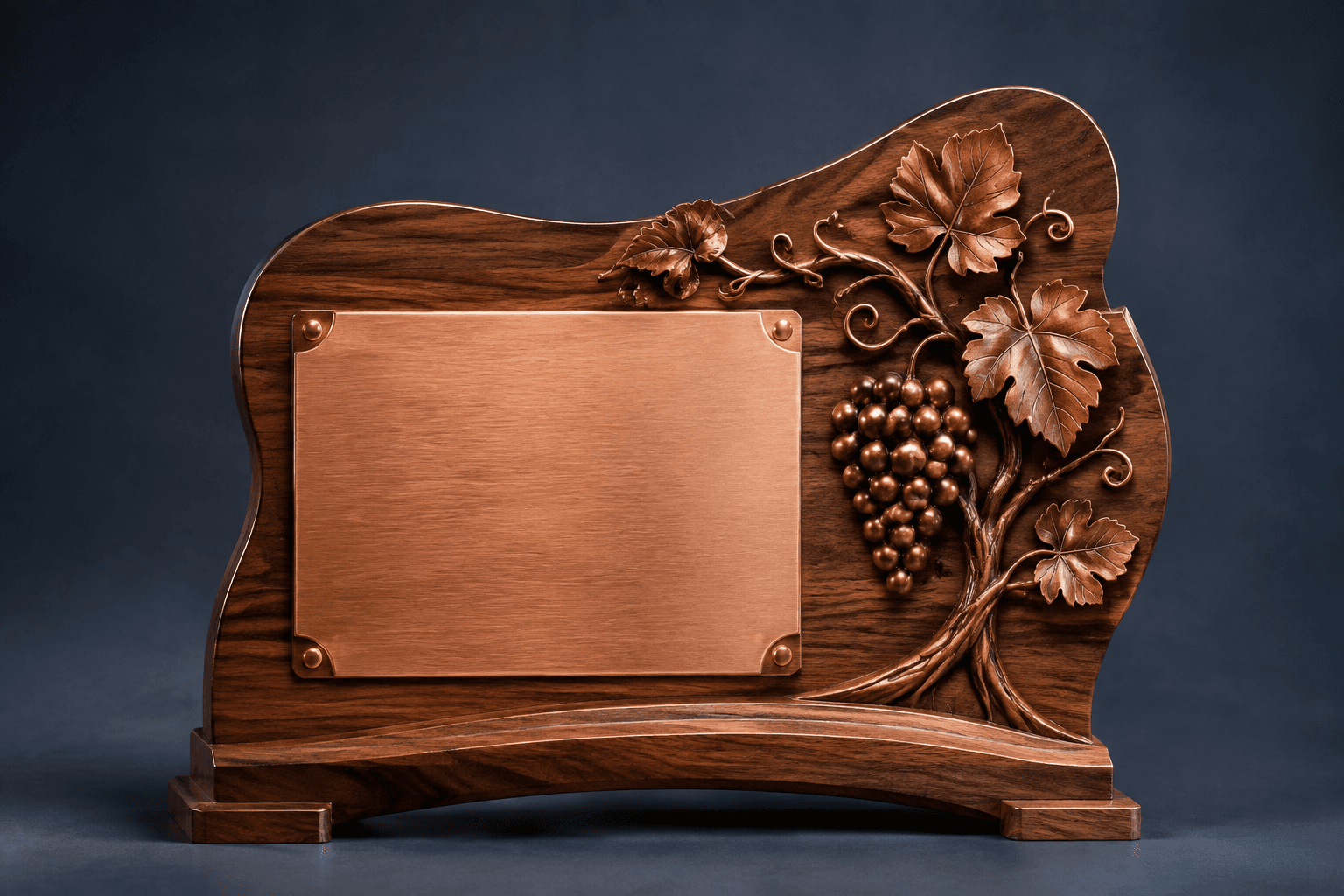
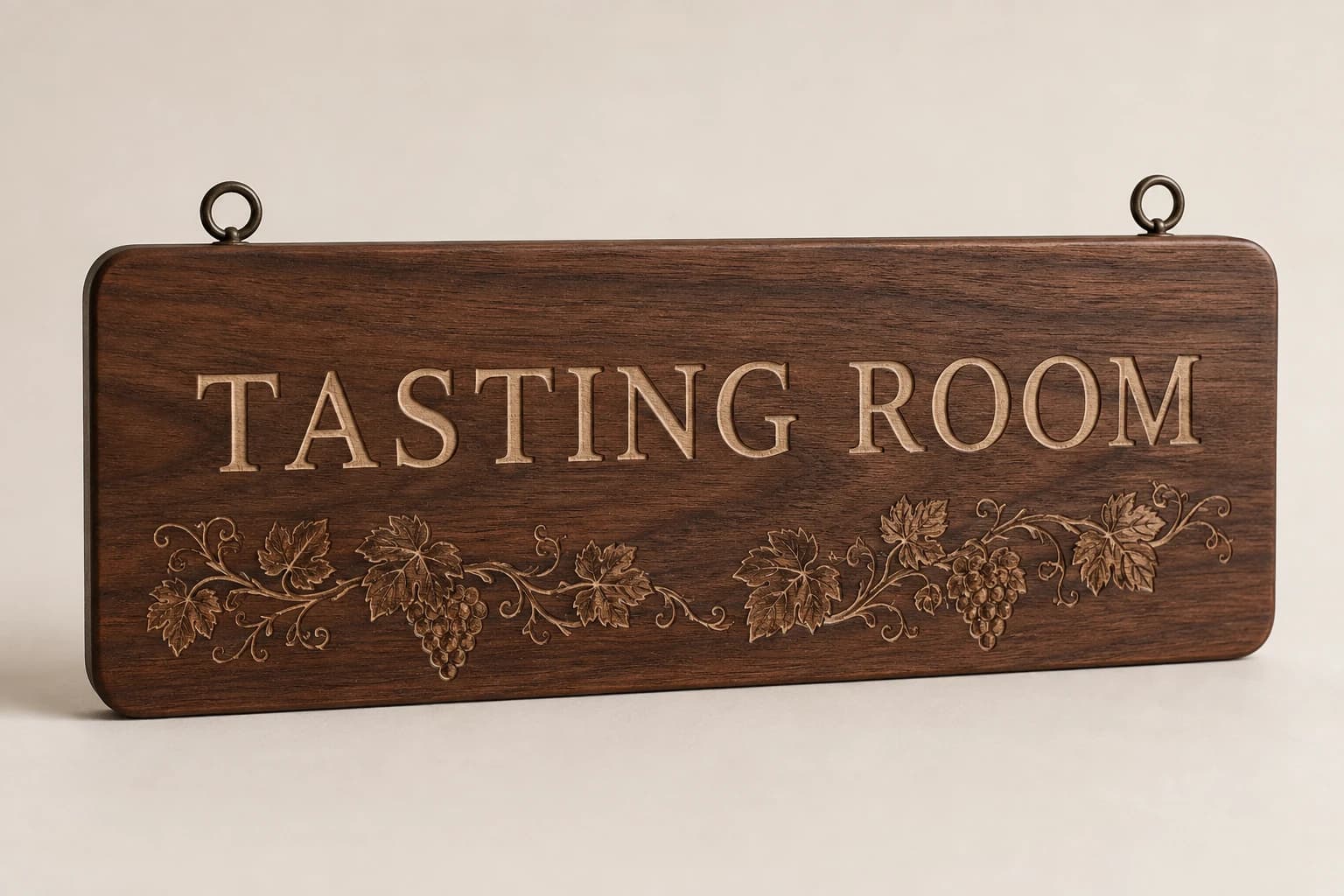
What should a permanent venue plaque say?
A venue plaque should use the approved public identity and any confirmed lasting message the owner wants displayed. A founding year, facility dedication or named contribution can be included only when the owner approves that specific fact. Leave current tasting selections and product-specific award claims separate unless the design clearly labels them.
Ask which entity is being named: the winery business, the tasting-room venue or a particular facility. Those can have different histories. A building opening date should not be relabeled as the founding year of the business merely because both dates appear in the same project folder.
Review the permanent message with the intended display location. A reception plaque and a bottle-adjacent award display have different contexts. The reader should be able to understand what is being recognized without needing a staff member to explain which year belongs to which subject.
Illustrative example: How do product-year and venue-history lines total thirty characters?
The fictional checker example compares Harvest 2026 with Venue Founded 1998. The first line has twelve characters and the second has eighteen, totaling thirty across two lines. Both fit a chosen twenty-character budget. The strings are arithmetic examples, not verified statements about a real wine, business or founding date.
Harvest has seven letters, then a space and four digits. Venue Founded 1998 contains five letters, a space, seven letters, another space and four digits. The worksheet keeps the two concepts on separate rows with separate meaning approvals.
The checker does not decide whether harvest is the right year label or whether the venue was founded in 1998. The buyer must supply those facts for a real order. A clean text count can support layout review, but it cannot turn illustrative history into an approved public statement.
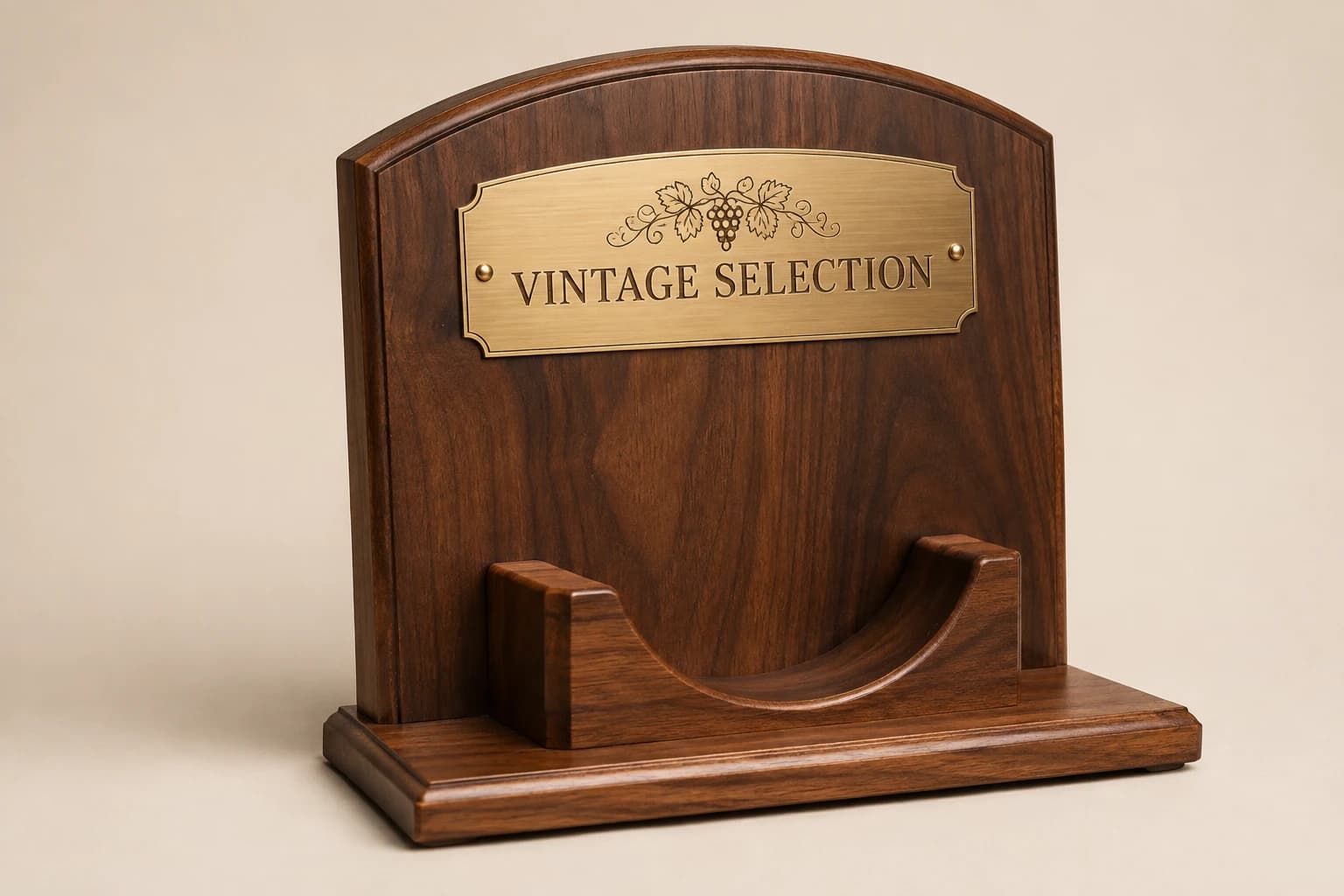
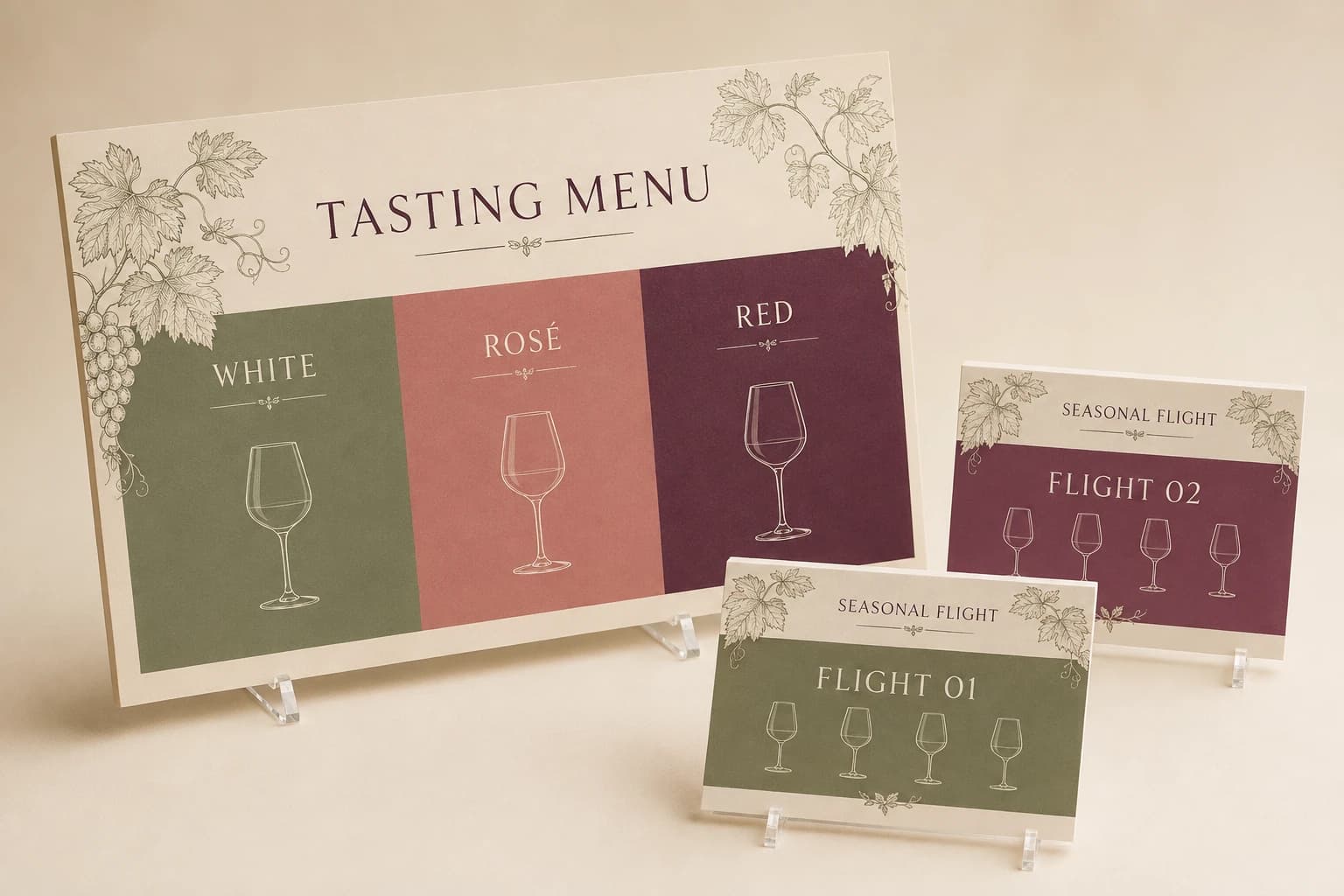
How should a display connect the award to the correct bottle?
Use an approved position or caption reference that connects the recognition to the exact product being displayed. If the bottle changes, review the caption relationship before leaving the historical award beside it. A physically convenient position should not imply that a different vintage received the same result.
If the venue wants to display a past award near a current offering, ask the owner to approve wording that makes the historical scope clear. Do not invent a general quality claim as a bridge between them. The object can accurately celebrate the past without asserting an unverified present result.
For a changing bottle display, consider whether the product caption should be replaceable under the actual proposed construction. Ask the maker to confirm that component scope. A permanent venue plaque can remain nearby while the product-specific information changes independently.
Compare product-year and venue-history lines
Load the fictional worked example, then replace every assumption with your approved project inputs.
Method: Count characters by line against a chosen budget. No vintage, award result, founding date or physical fit is verified.
Build your plan
Counts include spaces and punctuation. Character count cannot establish physical fit: font, script, layout, material and engraving area require a proof at actual size.
Use the article’s example files
Fictional example rows show how to separate physical quantities, wording and approval references. Replace them with your project schedule. HOLD and SAMPLE entries are not production instructions.
How should the order be quoted and reviewed?
Quote the physical recognition piece and venue plaque as separate deliverables unless a combined assembly is explicitly specified. Quantity, dimensions, personalization, approved artwork, display supports and delivery affect the written proposal. Review factual content separately from appearance so a beautiful layout does not substitute for confirmation of the award or venue history.
At receiving, compare the exact product, year and recognition line with the approved proof. Check the venue plaque against its own identity record. A correct logo on both pieces does not verify the different historical statements beneath it.
For later Cellar Sign Studio additions, identify whether the request is a new vintage award, a replacement historical piece or a venue identity update. Preserve those categories in the order history. They can share a visual family while remaining separate factual records that future staff can interpret accurately.
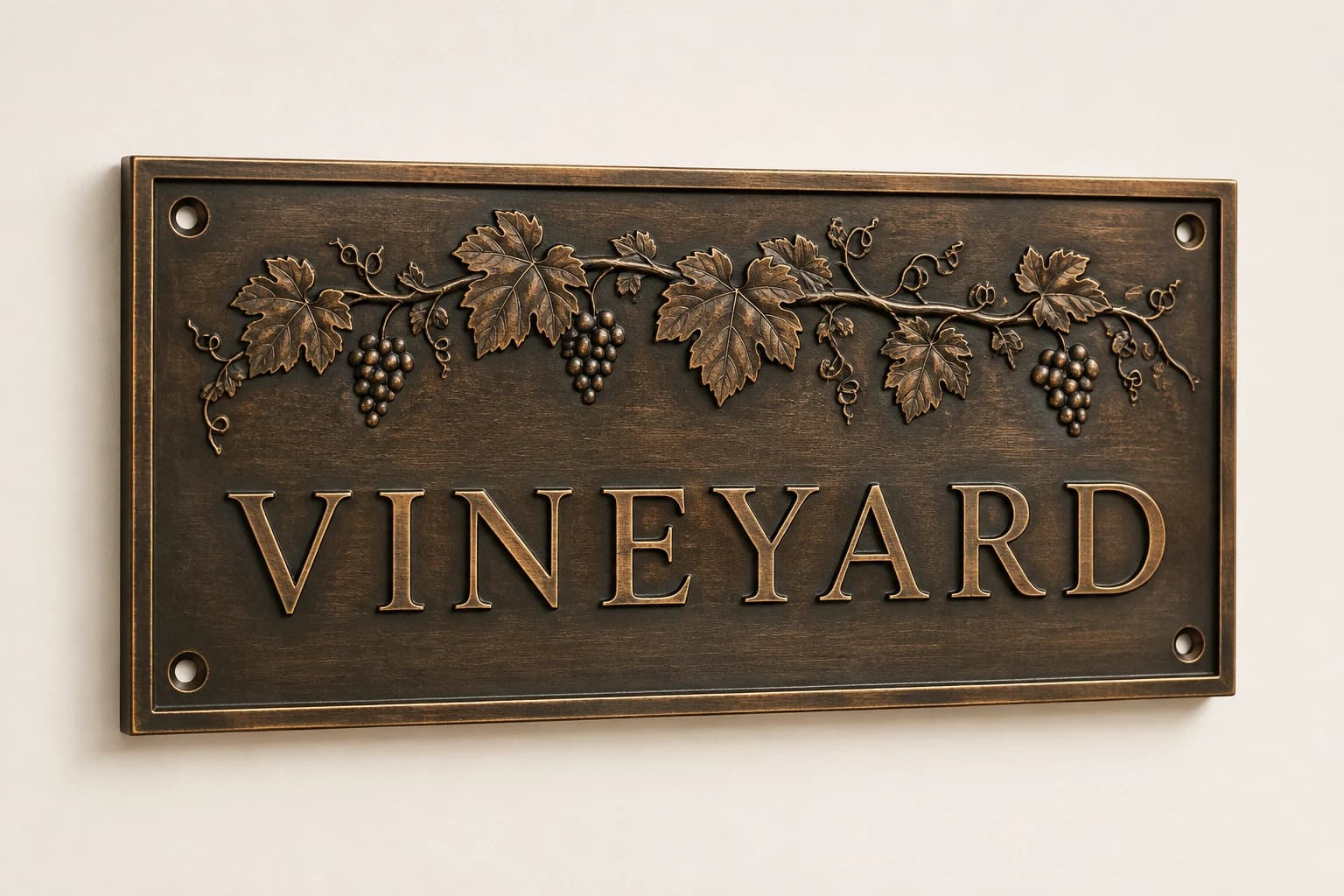
How should a historical award be reordered?
Retain the product name, vintage, recognition wording and approved source reference as one historical set. A replacement should reproduce that set unless the owner authorizes a correction. Do not change the vintage to the current bottle merely because the replacement is ordered in a later year.
For a venue plaque, retain the approved identity and any confirmed founding or dedication statement separately. Cellar Sign Studio requests are clearer when they identify whether the piece records a product result, a venue milestone or an intentionally combined display with those meanings kept distinct.
How do you handle several award years in one display?
Give each approved product result its own caption reference and keep its year attached to the correct wine. A display containing several historical awards should not use one shared year heading unless that heading accurately describes every item. The owner should approve the relationships before the designer arranges the pieces visually.
Create a small caption schedule with the product identity, vintage, recognition wording and physical position. If the same wine name appears in several years, do not merge the records simply because the titles look alike. Each approved result is a separate historical statement even when the physical award family is consistent.
When the venue adds another year, check whether the complete display still makes those distinctions clear. More objects can require a revised arrangement or a separate information panel. Ask for the actual physical proposal and keep the new result's factual approval separate from the older accepted records. An expanded display should preserve history, not overwrite it.
Which option fits this order?
Choose the object according to the subject and time period it records. A product award, a venue dedication and a combined display can all be useful, but each must preserve the approved relationship between names, years and recognition statements. Their visual similarity should not erase those factual differences.
| Option | Useful when | Scope to resolve |
|---|---|---|
| Vintage-specific award | A particular approved product result should be recorded. | Exact wine, year, program and recognition wording. NMSU discusses tasting menus and wine identification. |
| Venue identity plaque | The place or organization needs a lasting approved message. | Correct entity, confirmed history and intended display location. |
| Combined display | Both records are intentionally presented together. | Clear labels, separate factual approvals and product-to-award association. |
Sources: New Mexico State University: Design and Functionality of a Wine Tasting Room
What should buyers confirm before ordering?
Vintage recognition and venue history describe different subjects and time periods. Their quotes and factual approvals should remain separate even when the objects share a display. These answers explain historical replacements, current bottles and founding dates so a past product result is not accidentally presented as a claim about every present offering.
How is a vintage award priced compared with a venue plaque?
Cellar Sign Studio quotes should name the physical unit for each piece and describe its dimensions, personalization, artwork, supports and delivery. A product-specific award may need different content or display work from a permanent venue plaque. Compare complete written scopes; no universal price ratio or public rate is assumed.
Can a past award be displayed beside a current vintage?
Have the owner approve clear wording that identifies the historical product and year. Placement should not imply that the current bottle received the same recognition unless that is separately verified. Keep the award caption connected to its actual subject when changing the bottle arrangement.
Should the replacement use the current year?
Not automatically. A historical replacement should reproduce the approved original year unless the owner authorizes a correction. The year an object is reordered is a purchasing date, not evidence that the product result or venue milestone occurred then. Preserve that historical distinction.
Can the maker verify the medal or competition result?
Provide the owner-approved result and exact visible wording. The maker can reproduce the accepted statement and identify layout issues, but should not infer a recognition level or category from incomplete images or a generic award template. Missing facts need resolution before release.
Does a venue founding date belong on every award?
Only when the owner intentionally includes it and its relationship to the product recognition remains clear. A business founding year, facility opening year and wine vintage are different facts. Keeping them in separate approved fields helps prevent a concise design from implying the wrong history.
Sources and scope
The sources below support the cited technical details. The ordering workflows are editorial recommendations. Your project specification, price and schedule are established in the written quote and approved proof.
- New Mexico State University: Design and Functionality of a Wine Tasting Room · checked 2026-09-05
Which buying guide should you read next?
All buying guidesCellar Sign Studio helps buyers distinguish a lasting winery identity piece from a tasting menu that must change with the offer. For worldwide orders, specify the stable venue wording, the replaceable menu content and the physical display separately. One attractive design should not force a whole sign replacement whenever a flight changes.
Cellar Sign Studio bilingual tasting-room signs should help the same guest action in both languages while preserving approved wine names and vintage references. For worldwide orders, assign language reviewers before artwork is released. A translated heading, a product name and a price are different fields and should not be revised as one block.