Proofs for cask plaques, signs and awards
Before a cask plate or sign is engraved, you get a drawing at stated dimensions with the actual wording set in place. Cellar Sign Studio sends that proof so whoever keeps the cellar records can check each cask name, vintage, dedication and date while a change is still a quick edit.
Explore the service process
AI-generated process illustration. Equipment, materials and packaging shown are examples, not photographs of our workshop or completed orders.
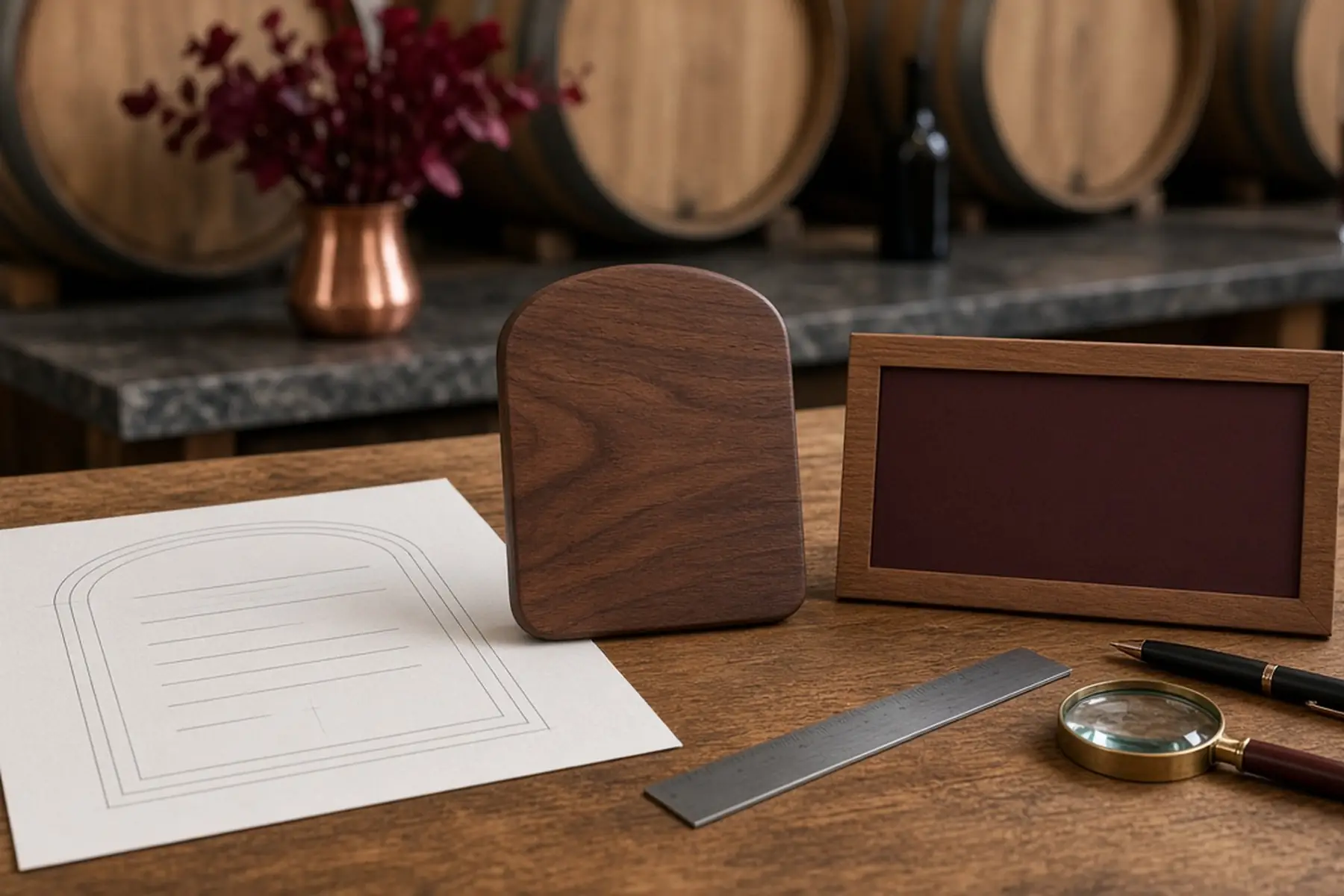
What should you check on a proof for a cask or barrel plaque?
Read the cask name, the dedication, the venue and the year against your cellar records, then check the plate dimensions against the barrel head or stave where it will sit. Send Cellar Sign Studio a single list of corrections and quote the version number printed on the proof, which stops an earlier draft from resurfacing.
What goes wrong when a cask plaque proof is hurried?
A distillery sells shares in single casks, and each owner gets a Barrel & Cask Dedication Plaque fixed to the barrel head. Every plate carries the owner's chosen cask name, a short dedication, the distillery and the fill year. The common mistake is not spelling. It is a correct plate on the wrong barrel, because two owners picked similar names or the list was sorted by surname instead of cask number. A proof laid out in cask-number order, with that number printed beside each plate, lets the warehouse lead match plate to barrel before anything is engraved. The second risk is fit. A flat rectangle drawn on screen has to sit on a curved, banded surface, so the usable width needs measuring first.
An example from this collection
Barrel & Cask Dedication Plaque
Provide the surface curvature and usable dimensions before choosing the plate. Specify whether the barrel is decorative or active equipment, and have the operator approve the mounting method for that intended use.
The details to personalize: cask name, dedication, venue, year. The product page lets you enter them and carry the design into your quote request.
How does a proof review work for cellar pieces?
01
Read it against the register
Open the cask register, the results sheet or the label file and read each proof line beside it. Check names, numbers and years one at a time. Have a second person read the digits aloud.
02
Hold a paper cutout to the surface
The proof gives dimensions. Cut paper to that size and hold it on the barrel head, the wall or the bar. A plate that looks small on a screen can cover a hoop or a bung.
03
Ask what the screen cannot show
A flat image cannot show wood grain, the tone of copper-colored metal or how a plate bends to a stave. When one of those is the deciding factor, request a sample or a reference piece ahead of sign-off.
Order terms in brief: Low minimums · production takes no more than 7 days, plus transit · rush available · worldwide shipping · 100% satisfaction refund. Full wording in the FAQ.
Questions about proofs for cask plaques, signs and awards
What should you check on a proof for a cask or barrel plaque?
Read the cask name, the dedication, the venue and the year against your cellar records, then check the plate dimensions against the barrel head or stave where it will sit. Send Cellar Sign Studio a single list of corrections and quote the version number printed on the proof, which stops an earlier draft from resurfacing.
How many rounds of proof changes can we ask for?
The revision rounds covered are written into your quote, along with the format the proof comes in. To stay within that, collect comments from the winemaker, the owner and marketing first, then send one list. Three people replying separately tend to contradict each other, and the proof ends up wrong in a new way.
What if a cask owner changes the dedication after approval?
Contact us straight away with the order reference, the cask number and the new wording. If engraving on that plate has not begun, the edit is simple. If it has, we tell you what a change would cost and how it moves the date before touching it. The other plates in the order carry on as approved.
Does the proof show the real color of the wood or metal?
A proof settles layout, wording and plate size, not tone. Walnut varies from board to board, and metal tones look different under cellar lighting than on a phone. If an exact tone matters, for example to match existing barrel hoops or bar fittings, raise it before you sign off. Ask whether a sample of that wood or metal can be supplied.
Who should approve the mounting on a working barrel?
Your cellar or warehouse operator. Tell us whether the barrel is a display piece or holds product, and the proof notes the plate size and proposed fixing points. Anything screwed, pinned or glued to working equipment is a decision for the person responsible for it, not one we make from a drawing.