Winery & Brewery Awards · Free planning resource
Winery Sign Material Comparison
Walnut and other woods, copper-tone and other metals, clear acrylic and full-color print all appear in this collection. The Cellar Sign Studio comparison tool places any two together and describes how each looks and where it is typically used. It ranks neither. Grade, finish and thickness are fixed in your quote, once you describe the barrel room, bar or vineyard post.
Compare two material directions
Acrylic
- Appearance
- Clear, translucent or colored; layered shapes can create depth.
- Applications to discuss
- Display awards, table signs and layered graphics.
- Confirm for your project
- Thickness, edge finish, scratch exposure, attachment and artwork contrast.
Wood
- Appearance
- Visible grain and natural variation; finish influences appearance.
- Applications to discuss
- Wall plaques, desk pieces, stall plates and keepsakes.
- Confirm for your project
- Species, grain variation, coating, cleaning and moisture exposure.
These are design directions. Specific grades, finishes and construction determine performance; compare written specifications and samples for your use.
The decision behind a tasting-room display order
Permanent venue identity and a changing tasting list need different update strategies. Consider whether the holder can remain while a printed or engraved insert changes. Keep wine names, vintage references and prices in an approved content file, and separate commemorative pieces from everyday service signs.
Keep with your brief: Station reference, current content, replaceable elements and cleaning conditions.
Understand what the result means
Compare the intended use, appearance and confirmable specification for each candidate material
The comparison does not rank every acrylic, wood, metal or crystal product on a universal durability or price scale. A suitable choice depends on the actual specification and use. Keep the selected material direction with your brief, and ask for the proposed grade and finish in the written quote.
Which material suits a barrel room, and which suits the bar?
A cellar door manager has two spots to fill. One is the stone wall of a cool, damp barrel room where tours stop. The other is the bar top, which is wiped down with cleaner many times a shift. Wood and acrylic are the pair she selects. For the barrel room she leans toward the walnut and copper-tone Tasting Room Sign, because it sits well beside oak and iron hoops. For the bar she looks at the Tasting Room Staff Nameplate in acrylic, since a smooth face is simple to wipe. She sends both choices to Cellar Sign Studio with a note on the damp and the cleaning product, and asks what finish is proposed for each.
Check these details before using the result
- Picking by the concept image
- Every sign picture in the collection is an AI-generated concept, not a photograph of walnut or copper. Use it for layout and ask about samples for surface.
- Leaving out the room conditions
- Say whether the spot is damp, sunny, outdoors or cleaned daily. The proposed finish depends on it, and the tool cannot ask.
- Comparing a large sign with a small plate
- Set walnut against metal for one piece at one size. Otherwise you are judging scale, not the surface.
Choose the pieces your plan describes
Use these designs to discuss the physical format, personalization and intended use. The images are original AI-generated concepts; final dimensions, material and construction are developed in the quote and proof.
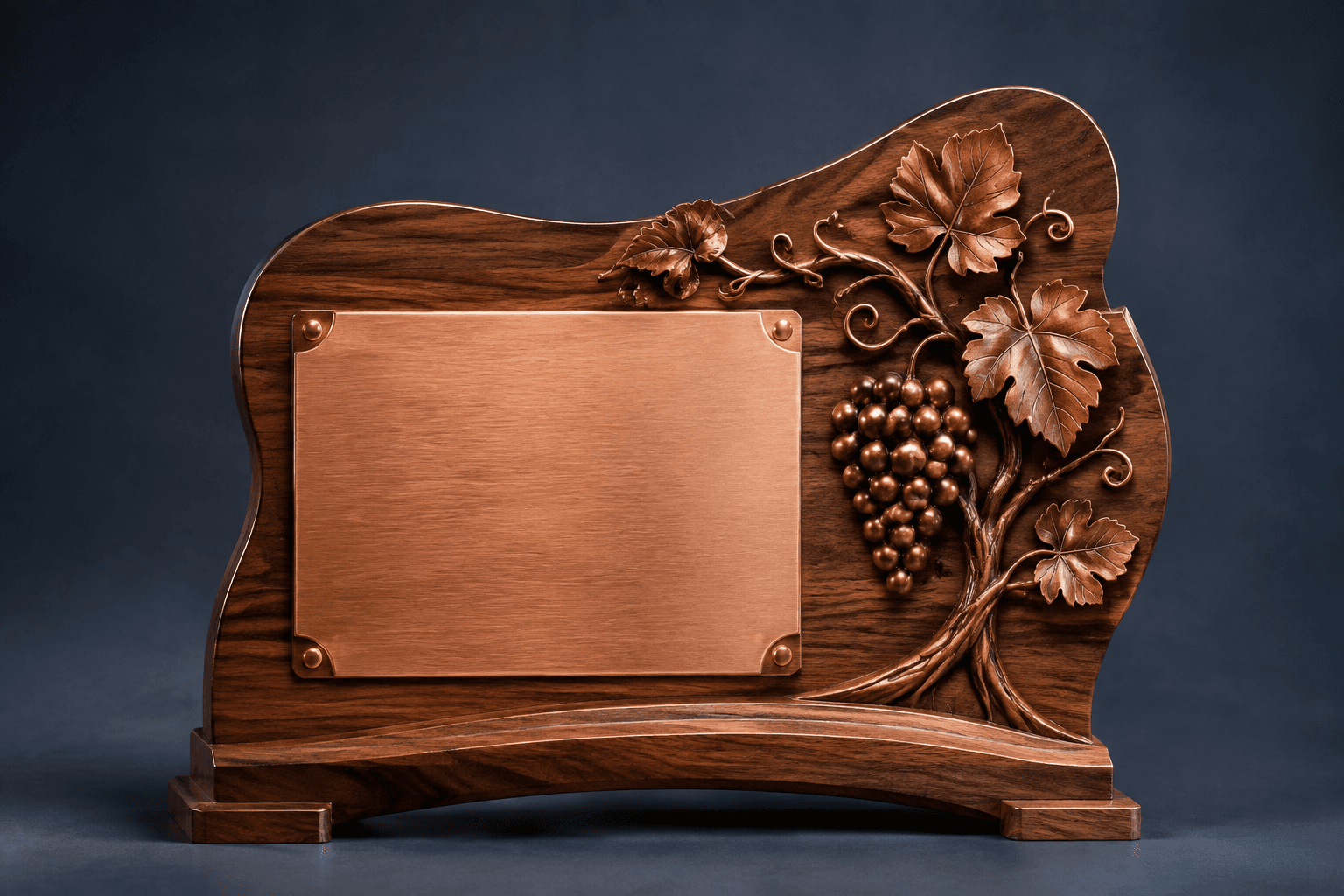
Design concept · Walnut and copper-tone metal
Tasting Room Sign in Walnut & Copper-Tone Metal
Choose whether the piece identifies the whole venue, a tasting area or a named barrel. That purpose determines the wording and scale; keep changing vintage lists and prices in an updateable menu format.
Explore the design and personalization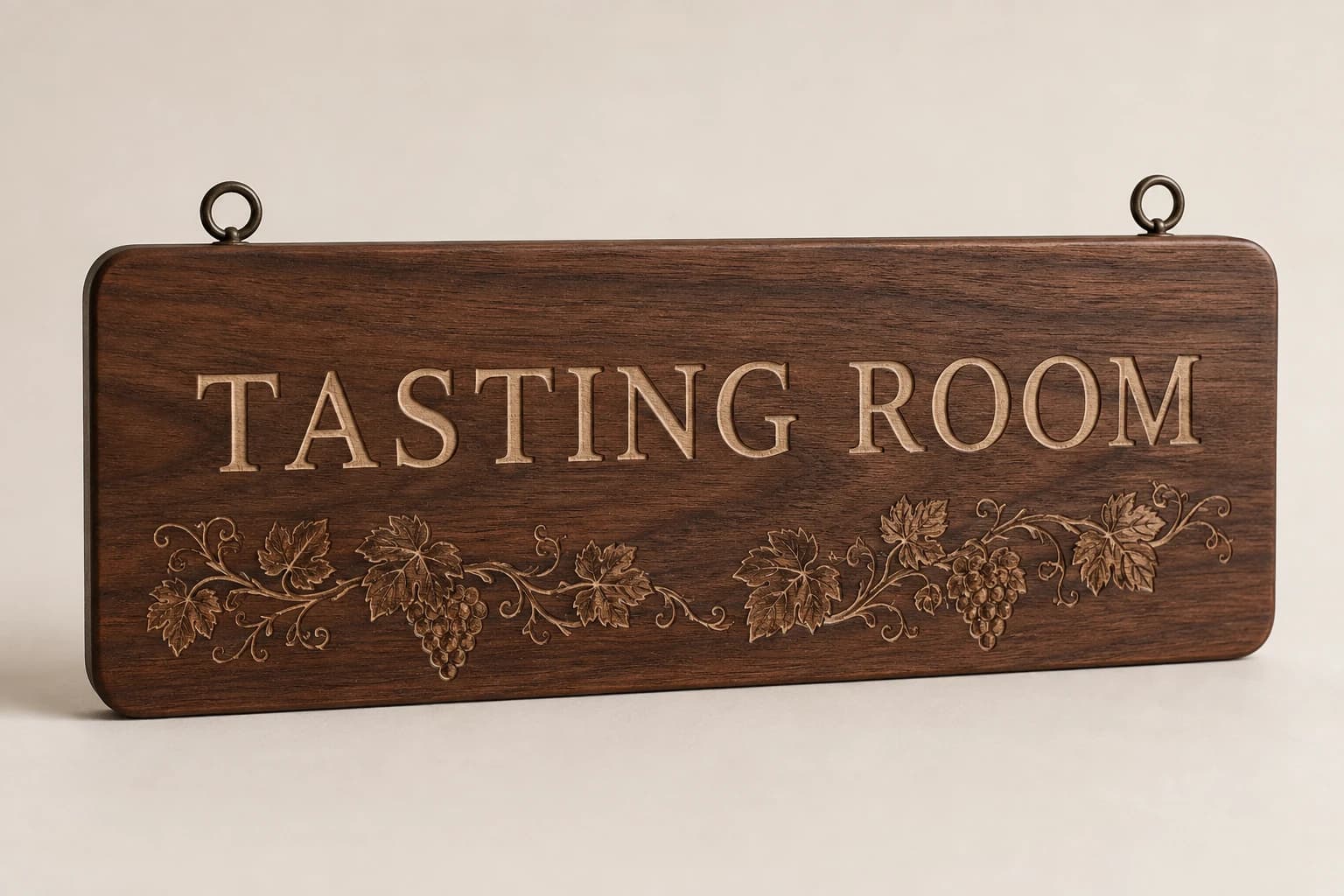
Design concept · Wood, metal, or acrylic
Tasting Room Sign
Start with the wall or entry location and the distance visitors will read it. If hours or reservation instructions change, keep them on a separate notice so the main sign remains useful over time.
Explore the design and personalization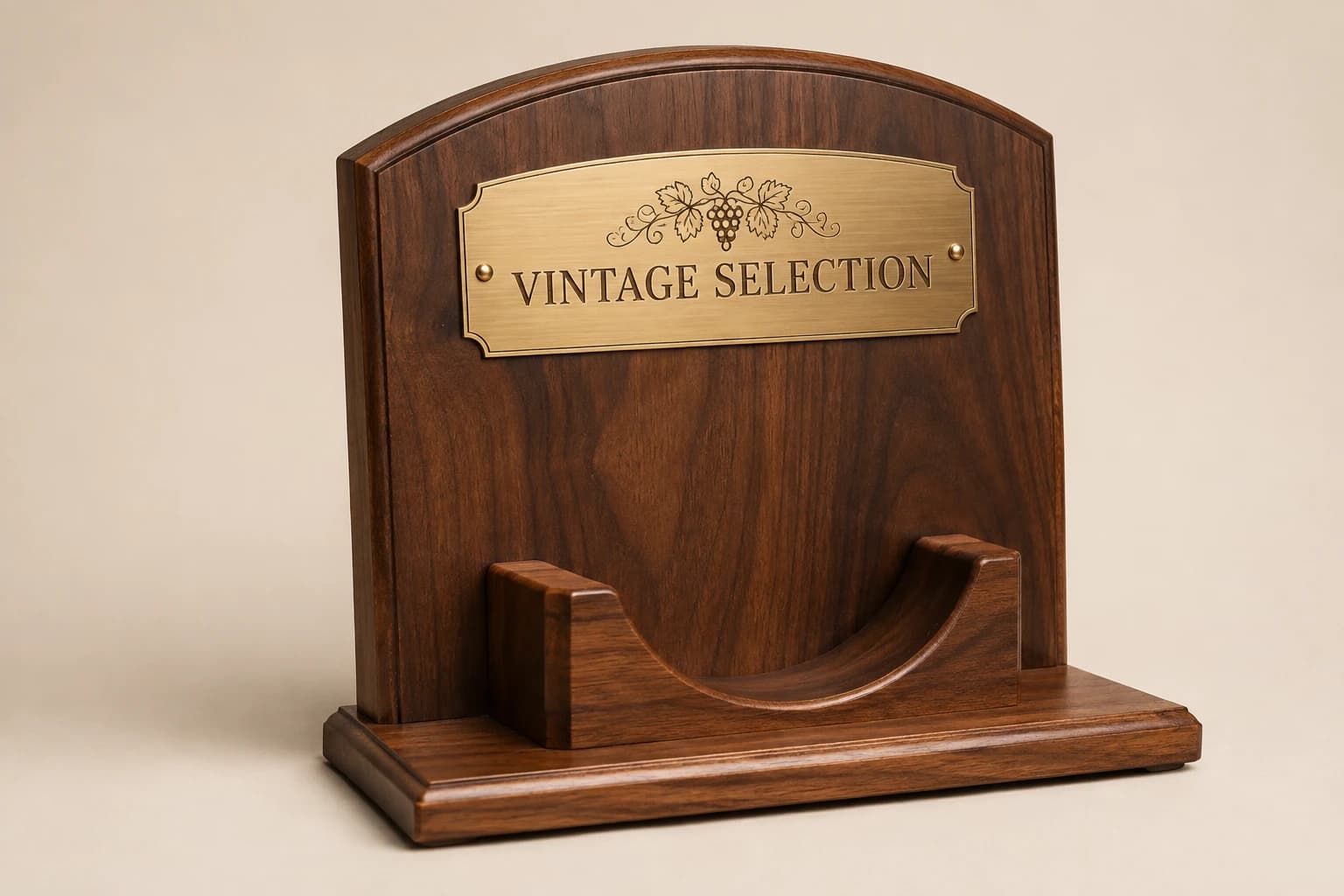
Design concept · Wood or acrylic
Bottle Display & Award Plaque
Measure the bottle and decide whether the plaque stands beside it or includes a holder. Reproduce award details exactly as granted, and keep vintage, producer and competition year separate when they differ.
Explore the design and personalization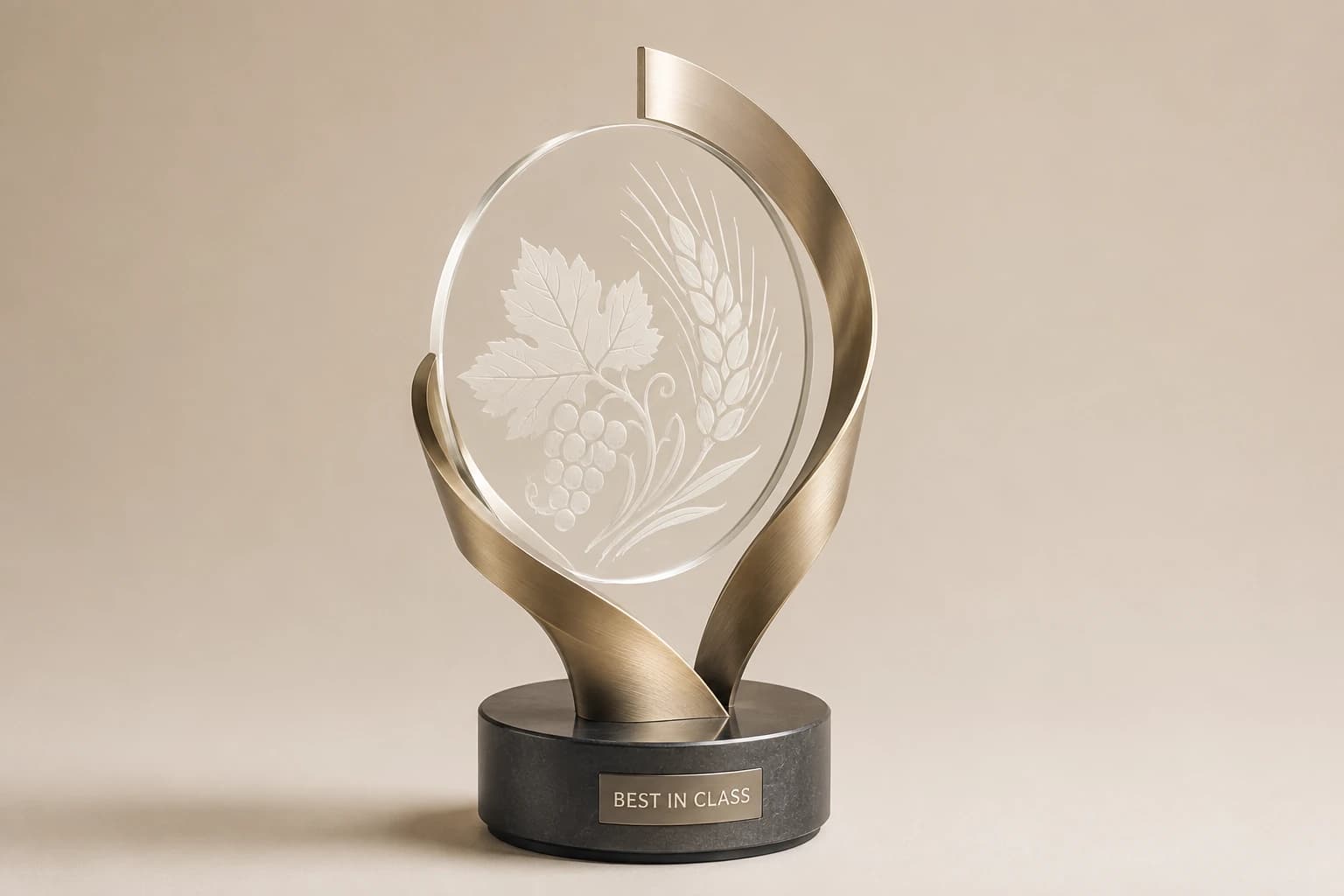
Design concept · Metal and acrylic
Wine & Beer Competition Trophy
Use the organizer's exact medal or placement and the correct entry name. A best-in-category award and an overall winner are different distinctions; the inscription should preserve the result that was actually awarded.
Explore the design and personalization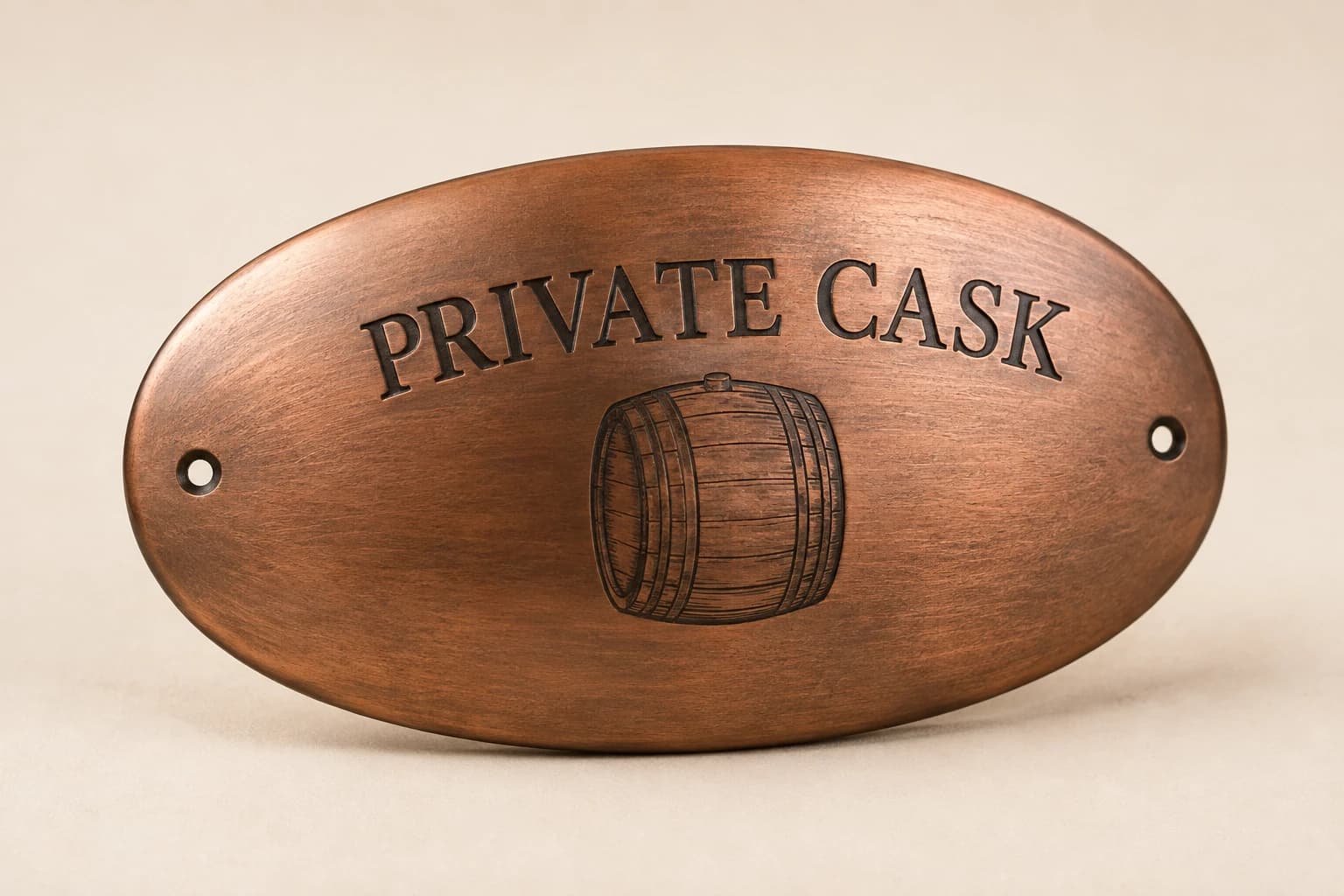
Design concept · Wood or metal
Barrel & Cask Dedication Plaque
Provide the surface curvature and usable dimensions before choosing the plate. Specify whether the barrel is decorative or active equipment, and have the operator approve the mounting method for that intended use.
Explore the design and personalizationQuestions about this checker
Which material should an outdoor vineyard plaque use?
It will not pick one, and we make no blanket claim about any material outdoors. Describe the spot: a post in open sun, a wall under an eave, a gate near sprinklers. Your quote answers with a proposed material and finish for that setting, and your site manager should review it before approving.
Can a walnut sign and acrylic nameplates look like one set?
Yes. Matching comes from shared lettering, artwork and proportions more than from one material. A wood wall sign and clear counter pieces can sit together when they use the same typeface and logo version. List the sign and the nameplates as separate rows, and ask to see both drawings together before approving either.
Which buying guide should you read next?
All buying guidesCellar Sign Studio tasting-room sign schedules should begin with the next action a guest needs to take, then assign a physical display to the approved location. For worldwide projects, separate arrival, tasting and checkout information from decorative venue identity. Count the resulting pieces after the guest path and current content are reviewed.
A supplier-side guide for wineries running barrel programs: what to engrave, how to collect member names cleanly with a downloadable intake template, how to batch orders per release and how to plan for barrels that go home at the end of a term. Cellar Sign Studio engraves the approved member list.
Cellar Sign Studio bilingual tasting-room signs should help the same guest action in both languages while preserving approved wine names and vintage references. For worldwide orders, assign language reviewers before artwork is released. A translated heading, a product name and a price are different fields and should not be revised as one block.
Cellar Sign Studio bottle-display orders should count complete display assemblies separately from the bottle positions they contain. For worldwide projects, provide the actual bottle dimensions and intended use for review. A display with four positions is still one ordered assembly when that is the construction described in the written proposal.
Continue your order planning
Quantity Calculator
Total the pieces a tasting room needs from the number of hosts or stations, the pieces each one gets, extra venue signs and any spares you choose.
Budget Estimator
Add up what a sign or plaque order will cost from numbers you supply: quantity, unit cost from your quote, setup, packing and shipping, and tax or duty.
Engraving Text Length Checker
Paste the wording for a bottle display or cask plate and see a character count per line, so long grape names and dedications are caught early.
Cellar Sign Studio quote
Send your winery and brewery award plan for pricing
For winery and brewery awards, Cellar Sign Studio prices from the piece, position, quantity, wording, artwork, setting and arrival. Paste the planning result into the message.