Winery & Brewery Awards · Free planning resource
Tasting Table & Menu Sign Planner
Enter the number of tables or tasting stations, the signs each one gets, any entrance or service signs and the spares you want. The planner multiplies and adds. For a tasting room, count indoor tables, bar stations and patio seating as separate areas first. Cellar Sign Studio then needs the breakdown, not only the total.
Build your plan
Count separate dining areas and event layouts before entering the table total. Spares are an explicit input.
The decision behind a tasting-room display order
Permanent venue identity and a changing tasting list need different update strategies. Consider whether the holder can remain while a printed or engraved insert changes. Keep wine names, vintage references and prices in an approved content file, and separate commemorative pieces from everyday service signs.
Keep with your brief: Station reference, current content, replaceable elements and cleaning conditions.
Illustrative example · Not a completed customer order
Plan tables and service points together
Twenty-four tables each need one sign. Four welcome or service signs and two spare table signs complete the order.
- Tables or stations
- 24
- Signs per table or station
- 1
- Reserved, entrance or service signs
- 4
- Additional spare pieces
- 2
Calculated example result
30 total pieces 24 × 1 = 24 main pieces Additional category pieces: 4 Additional spare pieces: 2
Load these inputs in the tool aboveUnderstand what the result means
(Tables or stations × physical signs per position) + other signs + spares
The result is 30 physical pieces, but they may require several artwork files. Keep a sign schedule describing the number, message and any QR destination for each type. A blank spare holder is useful only if its insert or message can be updated in the way you intend.
How many menu displays does a tasting room with a terrace need?
A tasting room has nine tables indoors and six on the terrace, which opens only in summer. The manager wants one tasting menu display on each, so guests can read the flights without queuing at the bar. She adds the two areas on paper first: fifteen stations. She enters fifteen stations and one sign per station. Four service signs follow: a Tasting Room Sign at the entrance, a club pickup sign, a card-only notice at the till and a sign for the terrace door. Two spare displays cover breakage on the stone terrace. The planner returns twenty-one. She asks Cellar Sign Studio to quote the fifteen displays as the Full-Color Tasting Menu Board in a small format, with the service signs on their own lines.
Check these details before using the result
- Counting only the main room
- Add the terrace, the barrel room and any private dining space before you enter the station total.
- Printing prices on every display
- If flights or prices change often, ask for a layout whose insert can be replaced, so fifteen holders are not remade for one new vintage.
- Treating seasonal tables as permanent
- Decide whether terrace displays are stored in winter. That affects how many spares you want and how they are packed.
Choose the pieces your plan describes
Use these designs to discuss the physical format, personalization and intended use. The images are original AI-generated concepts; final dimensions, material and construction are developed in the quote and proof.
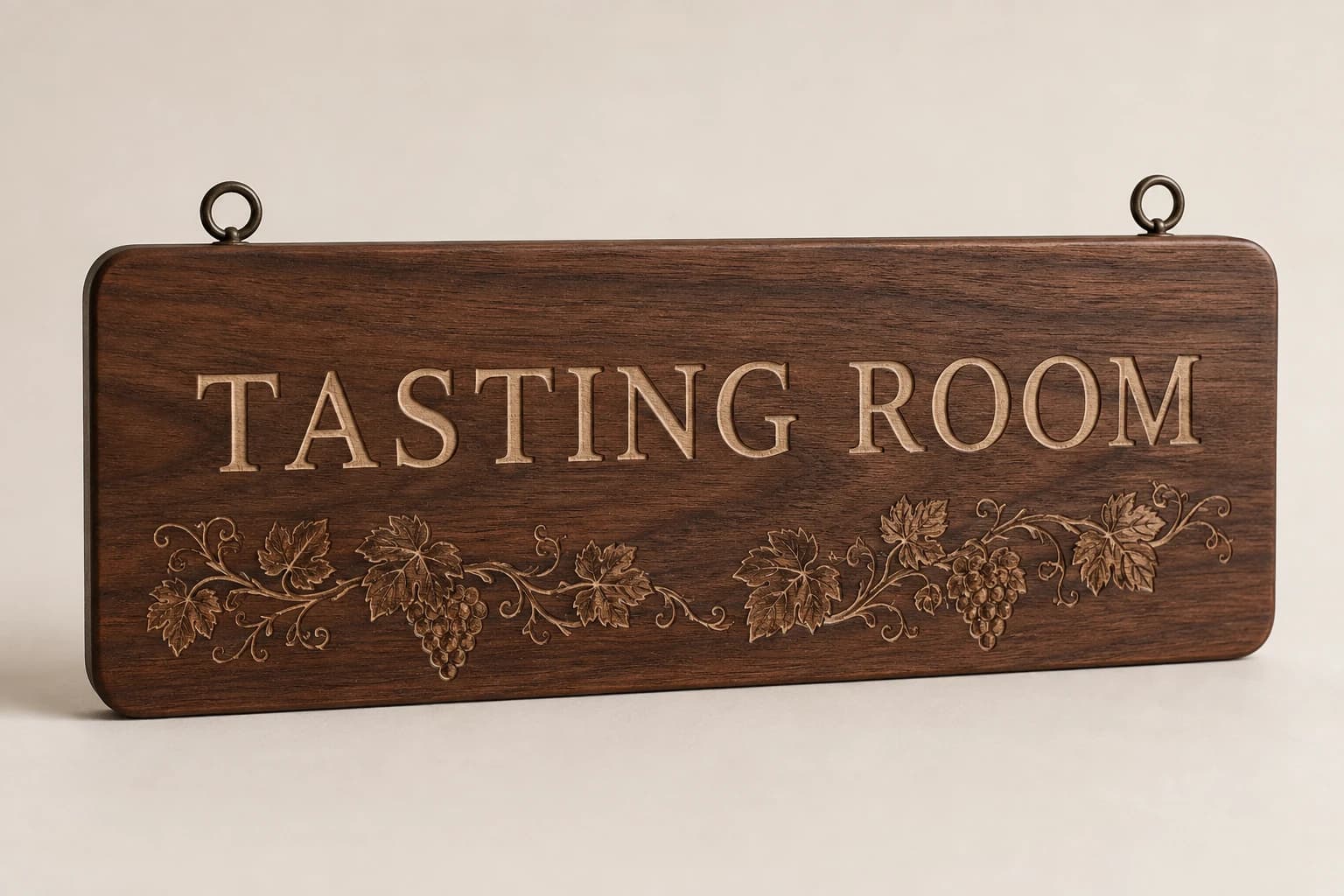
Design concept · Wood, metal, or acrylic
Tasting Room Sign
Start with the wall or entry location and the distance visitors will read it. If hours or reservation instructions change, keep them on a separate notice so the main sign remains useful over time.
Explore the design and personalization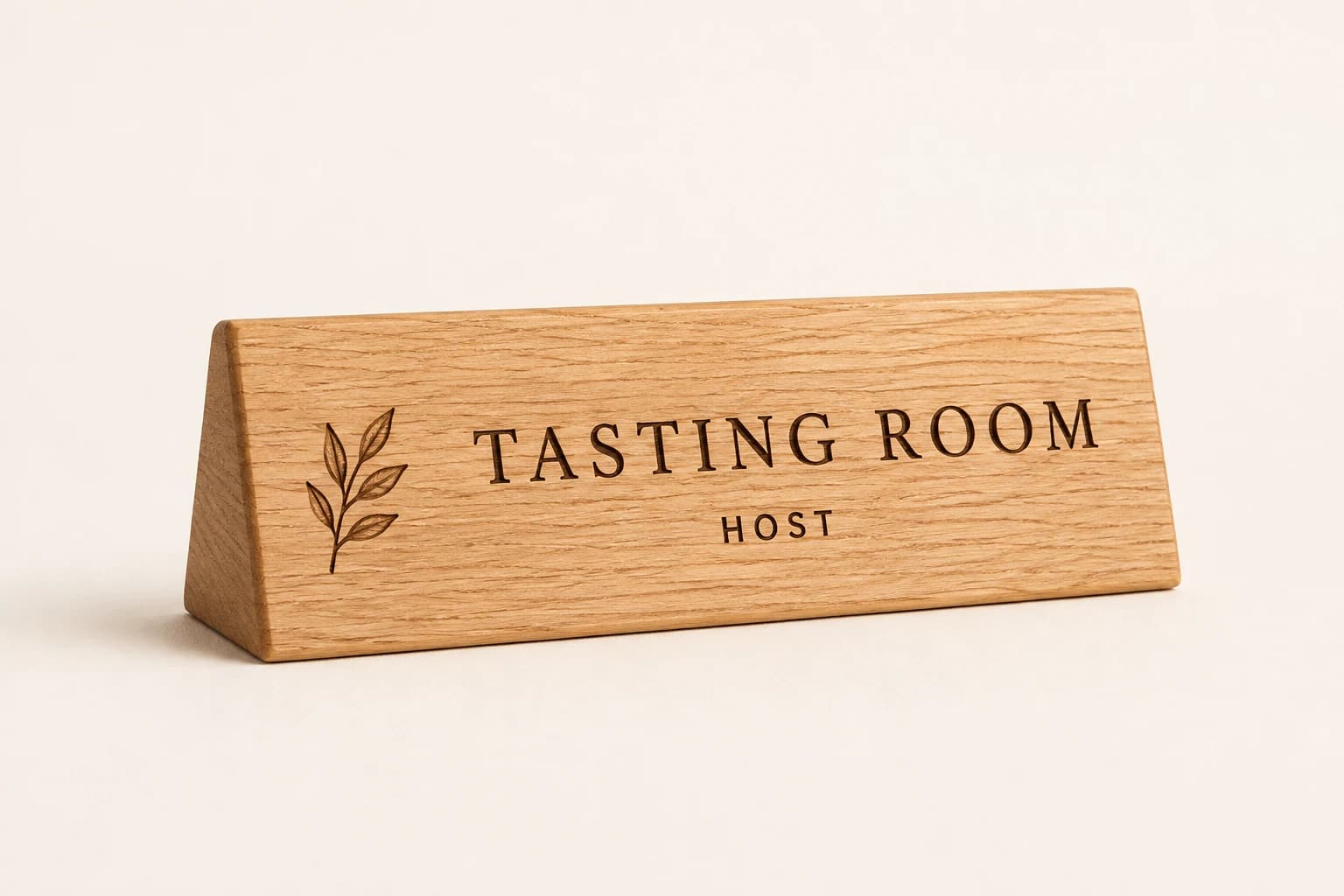
Design concept · Acrylic or wood
Tasting Room Staff Nameplate
Use the actual role rather than adding a qualification that has not been earned. For wearable badges, choose the attachment around the uniform and service environment; counter displays need their own dimensions.
Explore the design and personalization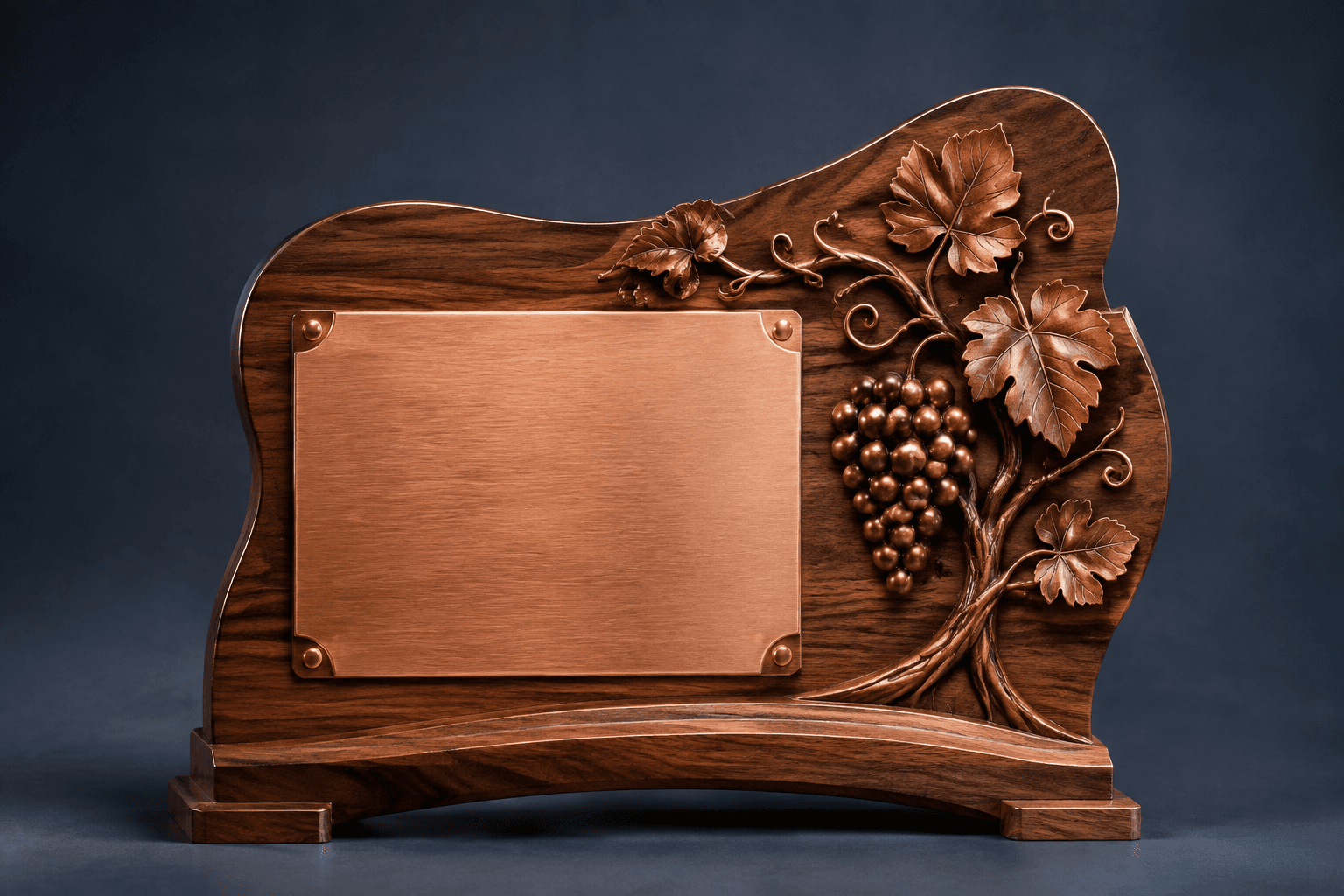
Design concept · Walnut and copper-tone metal
Tasting Room Sign in Walnut & Copper-Tone Metal
Choose whether the piece identifies the whole venue, a tasting area or a named barrel. That purpose determines the wording and scale; keep changing vintage lists and prices in an updateable menu format.
Explore the design and personalization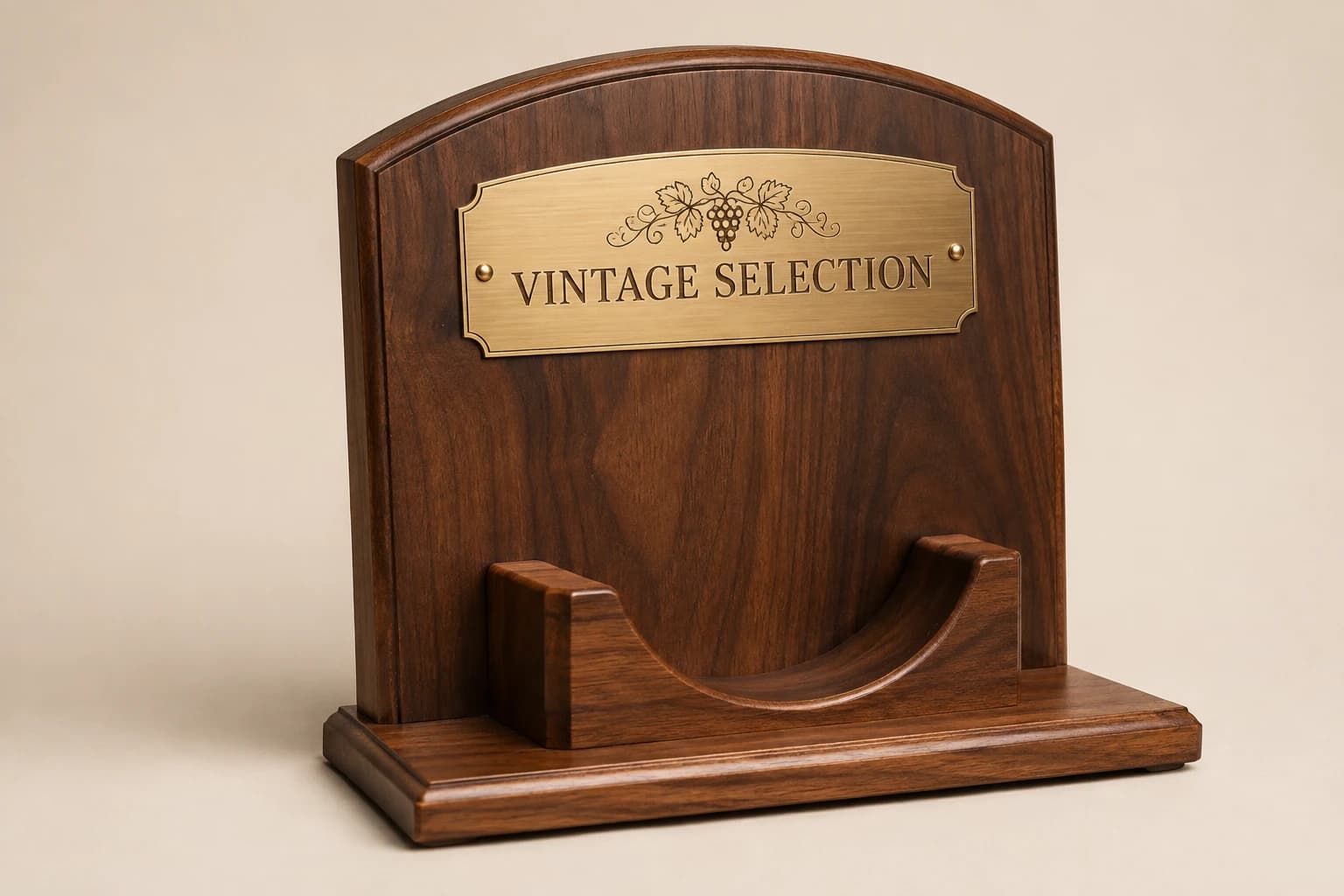
Design concept · Wood or acrylic
Bottle Display & Award Plaque
Measure the bottle and decide whether the plaque stands beside it or includes a holder. Reproduce award details exactly as granted, and keep vintage, producer and competition year separate when they differ.
Explore the design and personalization
Design concept · Metal and acrylic
Wine & Beer Competition Trophy
Use the organizer's exact medal or placement and the correct entry name. A best-in-category award and an overall winner are different distinctions; the inscription should preserve the result that was actually awarded.
Explore the design and personalizationQuestions about this planner
Is one menu sign per table enough for a busy tasting room?
That depends on how you serve. Seated flights with a host who explains each pour can manage with one display per table. A stand-up bar where guests order for themselves may want a display at each station. Enter the figure that matches your service, and the planner multiplies it across the room.
Should reserved-table signs be counted with menu displays?
Enter them in the field for reserved, entrance or service signs so they stay separate. They are a different piece with different wording, and you rarely need one for every table. Count how many tables you actually hold back for club members or bookings on a busy weekend and use that number.
Which buying guide should you read next?
All buying guidesCellar Sign Studio tasting-room sign schedules should begin with the next action a guest needs to take, then assign a physical display to the approved location. For worldwide projects, separate arrival, tasting and checkout information from decorative venue identity. Count the resulting pieces after the guest path and current content are reviewed.
A supplier-side guide for wineries running barrel programs: what to engrave, how to collect member names cleanly with a downloadable intake template, how to batch orders per release and how to plan for barrels that go home at the end of a term. Cellar Sign Studio engraves the approved member list.
Cellar Sign Studio bilingual tasting-room signs should help the same guest action in both languages while preserving approved wine names and vintage references. For worldwide orders, assign language reviewers before artwork is released. A translated heading, a product name and a price are different fields and should not be revised as one block.
Cellar Sign Studio bottle-display orders should count complete display assemblies separately from the bottle positions they contain. For worldwide projects, provide the actual bottle dimensions and intended use for review. A display with four positions is still one ordered assembly when that is the construction described in the written proposal.
Continue your order planning
Quantity Calculator
Total the pieces a tasting room needs from the number of hosts or stations, the pieces each one gets, extra venue signs and any spares you choose.
Budget Estimator
Add up what a sign or plaque order will cost from numbers you supply: quantity, unit cost from your quote, setup, packing and shipping, and tax or duty.
Engraving Text Length Checker
Paste the wording for a bottle display or cask plate and see a character count per line, so long grape names and dedications are caught early.
Cellar Sign Studio quote
Send your winery and brewery award plan for pricing
For winery and brewery awards, Cellar Sign Studio prices from the piece, position, quantity, wording, artwork, setting and arrival. Paste the planning result into the message.